


From $6.4 to $8.1 billion: over three years, Ralph Lauren’s revenue has risen by more than $1.6 billion. During a period when the luxury sector was showing serious signs of strain, the American group delivered striking results. At the end of its 2026 financial year, which closed in late March, the polo player brand crossed the $8 billion threshold for the first time, up 15% on a reported basis. The group’s share price then leapt by nearly 12% on Wall Street in the wake of the announcement, to the surprise of part of the financial community.
Growth well ahead of the market validates the first year of execution of the “Next Great Chapter: Drive” strategic plan. The plan was unveiled at an investor day in New York last autumn by Patrice Louvet, the group’s Franco-American CEO since 2017. His roadmap: elevate brand desirability, invigorate the core product while expanding into key categories, and saturate the thirty largest global metropolises through an ultra-high-quality omnichannel ecosystem.
This approach continues what the former Procter & Gamble executive has been implementing for nearly a decade and first materialised in a drastic commercial pivot. Ralph Lauren has upended its longstanding relationships with retailers.
“Our teams around the world have executed our strategy with excellence and agility to deliver a strong first year of our plan,” Louvet said on May 21 during a conference with financial analysts.
“This established model—balancing operational discipline and agility with investment in long-term growth—gives us the confidence we need. We delivered broad-based performance powered by diversified growth engines and our best sales quality to date.”

This “sales quality” in fact reflects a major overhaul of the wholesale network, particularly in North America. The group chose to dispense with accounts it deemed lower quality (known as lower-tier doors) and to sharply reduce inventory allocations to the off-price channel. By advancing its premiumisation agenda with department stores and digital platforms, Ralph Lauren has transformed relationships with key partners such as Macy’s and Zalando. The objective is crystal clear: prioritise full-price transactions, even if that means temporarily keeping overall wholesale volumes stable, in order to cement long-term desirability. The brand now relies on a tighter but powerful global footprint, comprising 594 branded stores and 644 department store corners.
AUR, conducted with algorithmic precision
But how did the brand manage to increase its share of full-price sales? By preserving its financial balance. Volumes are down, but the brand has focused on an acronym well known to analysts: AUR (Average Unit Retail), or the average unit selling price per item. In the fourth quarter, this jumped by 16%—a spectacular rise that validates the model and directly supports the revenue trajectory, up 12% at constant exchange rates for the quarter.
“Roughly half of this AUR growth was generated by stronger full-price sales, reduced discounting and targeted price increases, with the other half attributable to a favourable mix of products, channels and geographies,” explained Justin Picicci, the group’s chief financial officer. And the group is not applying this approach only to its flagships; its outlet network has also undergone a complete overhaul.
To appreciate how far things have come, recall that between 2015 and 2018 outlets and discount channels accounted for more than half of all items sold, resulting in a permanent markdown on products bearing the polo player logo. That context attracted many customers but eroded the brand’s long-term desirability. The group’s operating margin then struggled to clear the 10% mark. A radical shift: at the close of the 2026 financial year, adjusted gross margin peaked at 69% and operating margin reached a record 15.4%.
Its presence in off-price chains has been reworked and, while the group still relies on a network of 307 outlets (versus more than 330 before the health crisis), this channel has been completely transformed thanks to artificial intelligence and predictive analytics—an advantage that enables the group to adjust prices and promotions with ever-greater granularity, by store and customer type.
In store, the change is also tangible. The traditional round racks laden with entry-level T-shirts, once placed at the heart of outlet stores, have been relegated to the background. Space has been largely reallocated to higher value-added products.
“We’ve been pleasantly surprised by the price levels we’ve managed to achieve in our outlets,” said Louvet, highlighting the strong response from women customers to premium outerwear.

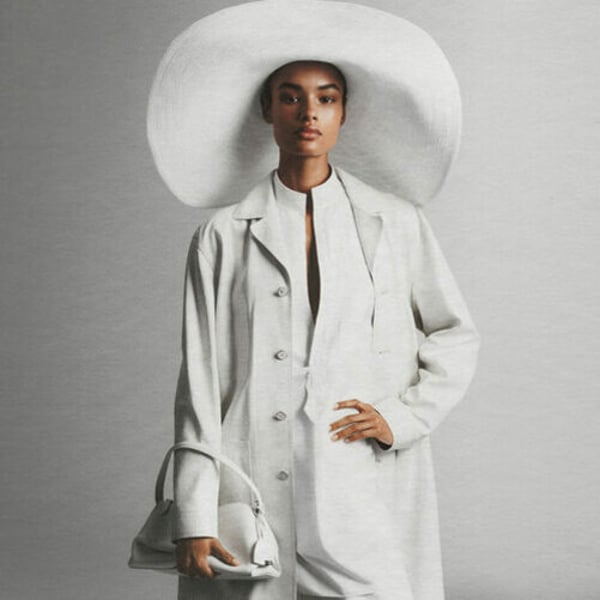
More broadly, Ralph Lauren is leaning on its classic propositions while also betting on high-potential growth categories such as womenswear, outerwear and handbags—the latter jumped by more than 20% over the year. In stores, this translates into an emphasis on cashmere cable-knit jumpers and leather jackets from the women’s line, and the roll-out of leather goods with the new Polo Play, and soon Polo Blaze, handbag families.
Bold marketing
Above all, the group is not merely reorganising its commercial approach. While European and American rivals are streamlining costs and cutting advertising and marketing budgets to protect margins, Ralph Lauren’s management has opted for a decidedly offensive stance. The group increased marketing spend by 21% over the past year, taking it to 7.9% of total sales—a deliberate strategy to recruit younger, more affluent consumers who are less sensitive to macroeconomic shocks.

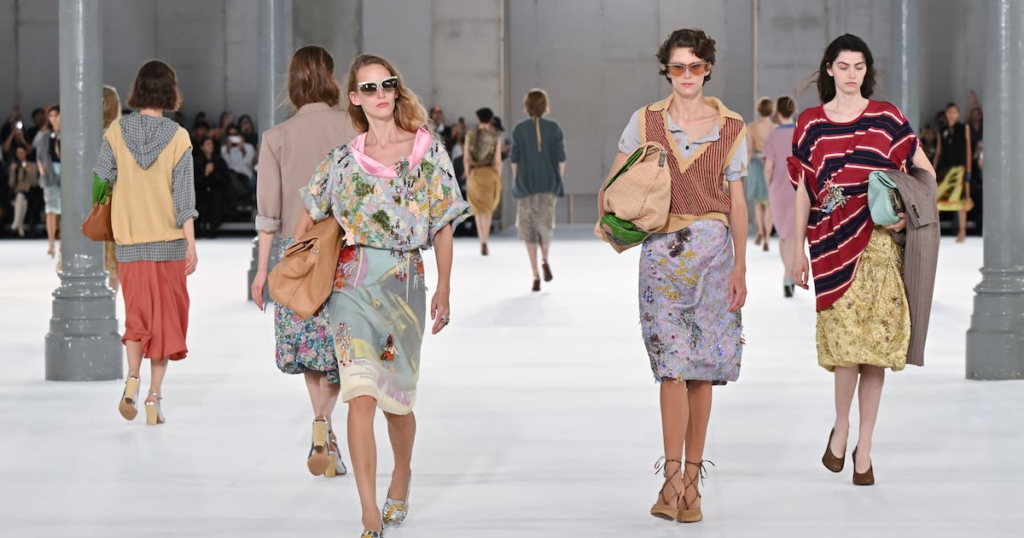
“There’s no absolute ceiling for our marketing investment as a percentage of sales. The determining factor here is the return on investment (ROI) we achieve,” said Louvet. The strategy has taken shape as a policy of maintaining a continuous cadence of high-impact cultural events across regions worldwide. Over the past quarter, the group invested heavily in fashion week calendars, staging a resounding comeback with its first men’s ready-to-wear show in Milan in more than twenty years, an exclusive presentation of the Women’s Polo collection in Paris, and its major show in New York. The chief executive also champions unconventional yet memorable initiatives, such as Ralph Lauren’s recent creation of a stamp collection entitled “American Icons” with the U.S. Postal Service to mark the 250th anniversary of the United States of America.

At the same time, the brand continues to secure a prominent presence at major global sporting events to maximise its premium status. On the sidelines of the latest Milan–Cortina 2026 Olympic Winter Games, where the group took first place in terms of share of voice on social media, thanks to Taylor Swift wearing a Polo Bear T-shirt at the opening ceremony, Ralph Lauren is capitalising on its historic tennis partnerships with Wimbledon and the US Open.
The legendary London grass-court tournament serves as an international showcase for the brand’s “quiet luxury” aesthetic and tailoring range, a lever to support overall price increases. For the 2026–2027 financial year now under way, the brand is holding its course, with the chief executive again targeting a budget equal to 8% of sales.
Towards measured growth in Europe
Louvet and his teams have mapped out a roadmap to generate fresh growth in 2026–27. While the overall indicators are green—bolstered by more than 50% growth in China and a recovery in North America—management is issuing cautious guidance for the months ahead, targeting consolidated growth of 4% to 5% for the 2027 financial year. In this context, the European market (EMEA) warrants heightened vigilance.
“Our outlook for the 2027 financial year reflects a cautious approach to the consumer environment and short-term macroeconomic pressures, including high energy costs, disruptions to partner sales in the Middle East and to tourism, as well as the high basis for comparison in the 2026 financial year,” said Picicci, who anticipates a slowdown on the Old Continent, pointing to moderate growth in the low-to-mid single digits.

The distinctive feature of Louvet’s approach, endorsed by the eponymous founder, is its long-term horizon despite quarterly market pressures. Ralph Lauren is, therefore, developing more unexpected initiatives, such as the continued success of Ralph’s Coffee lounges in major capitals, developed with Loulou Group, and recent technological forays like the Ask Ralph virtual assistant—projects conceived for the long haul.
“We’re not in China, or anywhere else, just to win this year,” said Louvet. “We’re here to win over the next ten to twenty years, by laying the right foundations.” For now, that philosophy is serving Ralph Lauren very well.
This article is an automatic translation.
Click here to read the original article.
Copyright © 2026 FashionNetwork.com All rights reserved.