
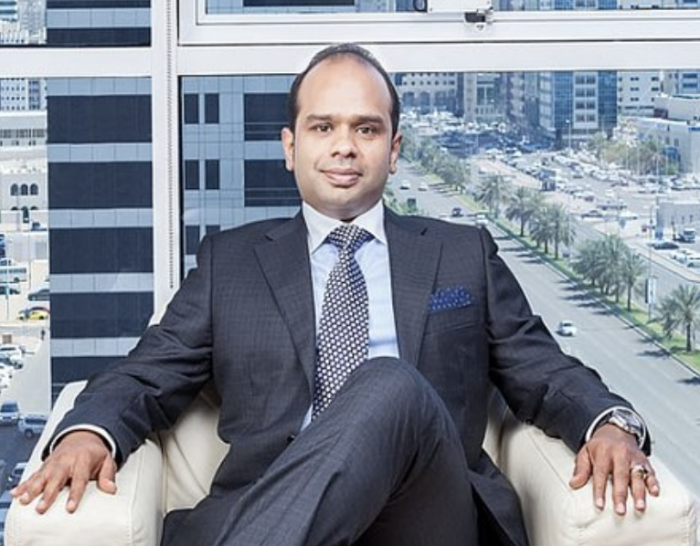
Adeeb Ahamed approaches hotels as both experiences and long-duration assets. Since founding Twenty14 Holdings in 2014, he has assembled a portfolio valued at more than $750 million, with properties in the UK, the Middle East and India. The collection includes Great Scotland Yard in London, Sheraton Oman, Pullman Dubai Downtown, Port Muziris in Kochi and the historic Caledonian in Edinburgh.
Ahamed’s route into hotel investment was not conventional. He began his career in hospitality, with experience connected to Grosvenor House, JW Marriott and Baglioni in London, but later built businesses across financial services and food retail. He established LuLu International Exchange in 2009 and became the driving force behind Tablez, a food and beverage and retail platform.
His interest in hospitality began in his father’s restaurant, where an early lesson about cleaning baking trays rather than supervising others shaped his belief in personal responsibility. That operational grounding stayed with him as his businesses became more financial and investment-led. It helps explain why Twenty14 has not pursued real estate purely as a passive store of value. The company focuses on properties where the building, operator and guest proposition can be actively repositioned.
Great Scotland Yard is the clearest example. The former Metropolitan Police headquarters required a complicated conversion, careful planning and a narrative that acknowledged its history without becoming themed. Twenty14 worked with developer Galliard Homes and an international operator to create a hotel whose library, artworks and interior references interpret the building subtly. The project demonstrated Ahamed’s willingness to accept development risk in return for an asset that could not be easily replicated.
Those businesses sharpened capabilities that transfer directly to hospitality: understanding cross-border customers, allocating capital, managing regulated operations and building consumer-facing brands. Twenty14 brings them together in an investment model backed by the wider LuLu Group ecosystem.
The portfolio is deliberately varied. Great Scotland Yard transformed a building associated with British policing history into a luxury hotel. The Caledonian is one of Edinburgh’s best-known railway-era landmarks. Port Muziris connects an international hotel standard with Kerala’s cultural identity and proximity to Cochin airport. The common thread is not a single flag, but assets with a strong location or story.
Ahamed typically works with established operators rather than attempting to build a global management company of his own. That separates property ownership from brand and operating expertise. It also allows Twenty14 to select partners appropriate to each asset, while retaining exposure to long-term real estate value.
Heritage conversion is particularly demanding. Older buildings bring structural constraints, planning requirements and high restoration costs. Their character can command a premium, but only if the operational layout works and the story is translated into a contemporary guest experience. Great Scotland Yard demonstrates Ahamed’s willingness to accept that complexity in pursuit of a distinctive asset.
His financial-services background also shapes his view of source markets. LuLu International Exchange serves customers with strong connections between the Gulf, South Asia and other regions. That knowledge can inform where travellers move, how they spend and which cities offer durable demand beyond short tourism cycles.
The risks are those faced by every hotel owner: interest rates, construction costs, operator performance and the vulnerability of city demand to external shocks. A mixed portfolio can provide diversification, but it also requires local expertise in each jurisdiction.
The operator relationship is a continuing source of value and tension. An international flag can improve distribution, but the owner must still challenge budgets, renovation priorities and management fees. Ahamed’s varied portfolio means Twenty14 cannot rely on one standard contract or performance assumption. The team must understand the economics of each city and ensure that a celebrated building does not become an emotionally attractive but financially weak investment.
Ahamed’s wider roles in international business and tourism forums reflect an interest in the policy environment around investment. Yet his most visible contribution is physical: reviving buildings, backing operators and creating hotels that can become part of a city’s identity. Twenty14’s model shows how Gulf capital can participate in global hospitality through patient ownership rather than rapid brand proliferation.