



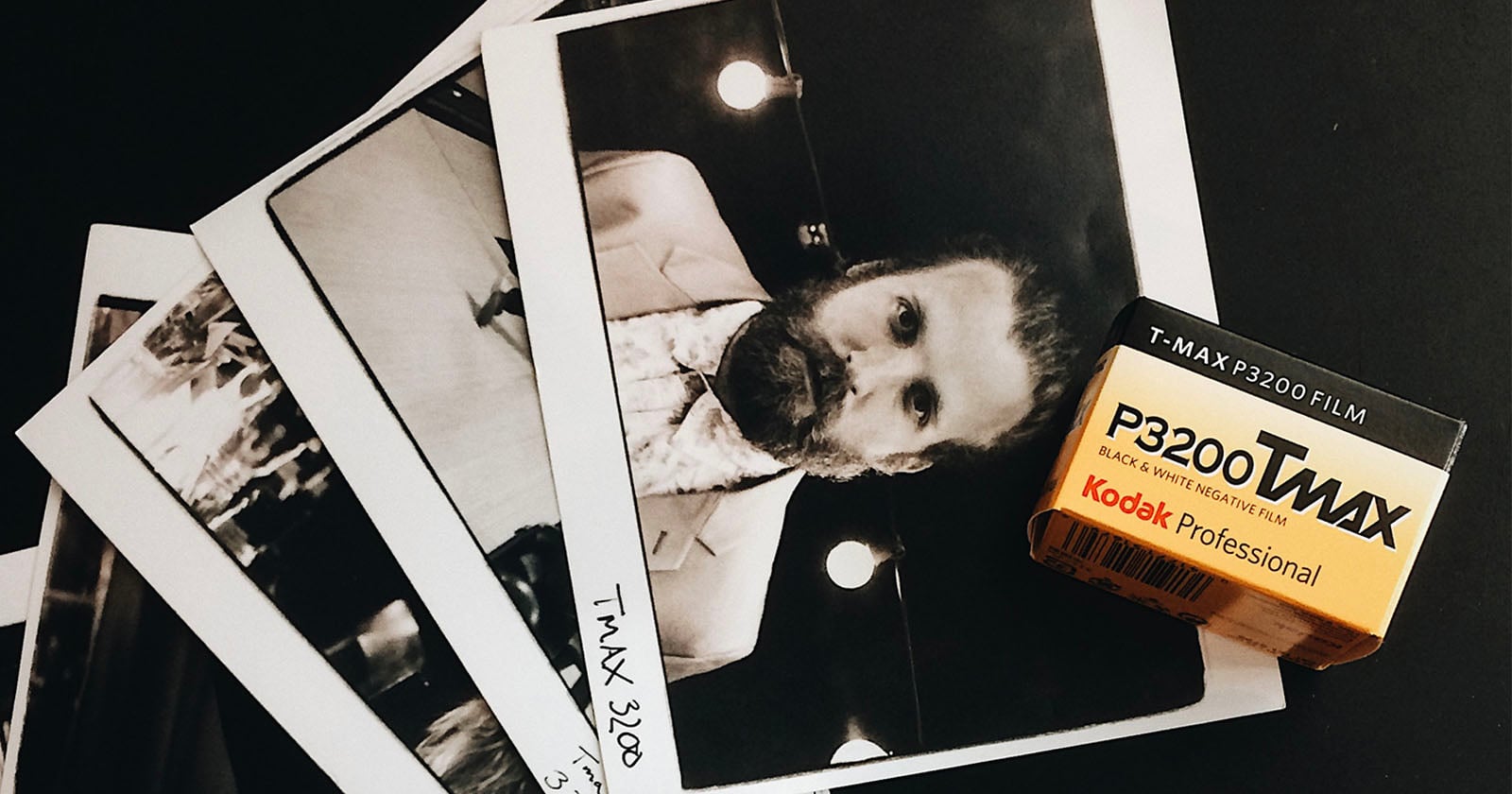
This Film Friday is featuring our favorite low-light film: Kodak T-Max P3200. T-Max P3200 is one of the fastest films you can load into your favorite 35mm camera and is perfect for a night out if the flash has to stay home or for just scratching that itch you have for superb contrast and graininess.
There are not many super-high-speed options out there in the film world. Ilford manufactures Delta 3200 (in both 35mm and 120, no less), and Kodak has T-Max P3200. Below that, you drop to ISO 800 in color and all the way to ISO 400 for the next fastest B&W film. Back in the day, we had Fujifilm Neopan 1600, Provia 1600, and Natura 1600, among a few other options, but those are long gone. So, the two 3200 films we have on the market fill an important role.
Kodak T-Max P3200 (TMZ for short) was originally introduced in 1988 as the third member of Kodak’s T-Max family of films, along with T-Max 100 (TMX) and T-Max 400 (TMY). The T-Max films are noteworthy for their T-grain structure. Similar to Ilford’s Delta films, T-grain films are designed to produce a smoother grain structure that has less grittiness to it and prints and scans more cleanly. But honestly, you will never think of T-Max P3200 as a fine-grained film—quite the opposite, in fact. But that’s OK, because its grain is one of the features we like best about it.
Let’s face it. T-Max P3200 is grainy, but grain is the price you will pay for speed. Our recommendation is to embrace grain, learn to appreciate it, and even love it. Grain is the building block of analog images; it is an integral part of how the photo is made. Once you come around to this, your love of black-and-white films will only grow and grow. And if you are already a fan of film grain, there are few films out there that will please you more than P3200. Buy this film for its grain and consider everything else it has to offer as icing on the cake.
Speaking of which, grain is not the only feature T-Max P3200 has going for it. Its other big strength is its speed. The film is marketed as an ISO 3200 film. If you do any sort of research into this film, you will quickly discover that it is really an ISO 800–1000 film (depending on how you develop it). The “P” in P3200 stands for “push”, as in that is what you are essentially doing with this film when shooting it at 3200.
Our suggestion? Forget all of that. It just causes confusion. Think of P3200 as an ISO 3200 film, because among the many things it does well is expose at ISO 3200. Rate this film at its box speed, go out into the dark, and odds will be good that you come home with decent exposures. This reliability at high speeds has long endeared T-Max P3200 to us. In contrast, while there are things we like about Ilford Delta 3200, we almost never expose it at ISO 3200, generally opting for a slower ISO 1600 or even ISO 1000 rating to help ensure decent exposures. In our experience, Delta 3200 needs to be paired with Ilford developers to really hold onto its speed, whereas P3200 doesn’t seem to be quite as picky. With T-Max P3200, we have no fear of rating it for those higher speeds.
And speaking of higher speeds, T-Max P3200 can actually go even higher. One of our own staff members set out on a mission to see how high he could take P3200. He got it up to ISO 102,400 before he felt like the process (either the film’s sensitivity or his developing) was breaking down. While his results at those absurdly high speeds are grainy beyond belief and have crunched shadows, they do an excellent job of showing the versatility of this film. Even if ISO 102,400 is not your cup of tea, rest assured that the film will handle ISO 6400 or 12800 pretty dang well.
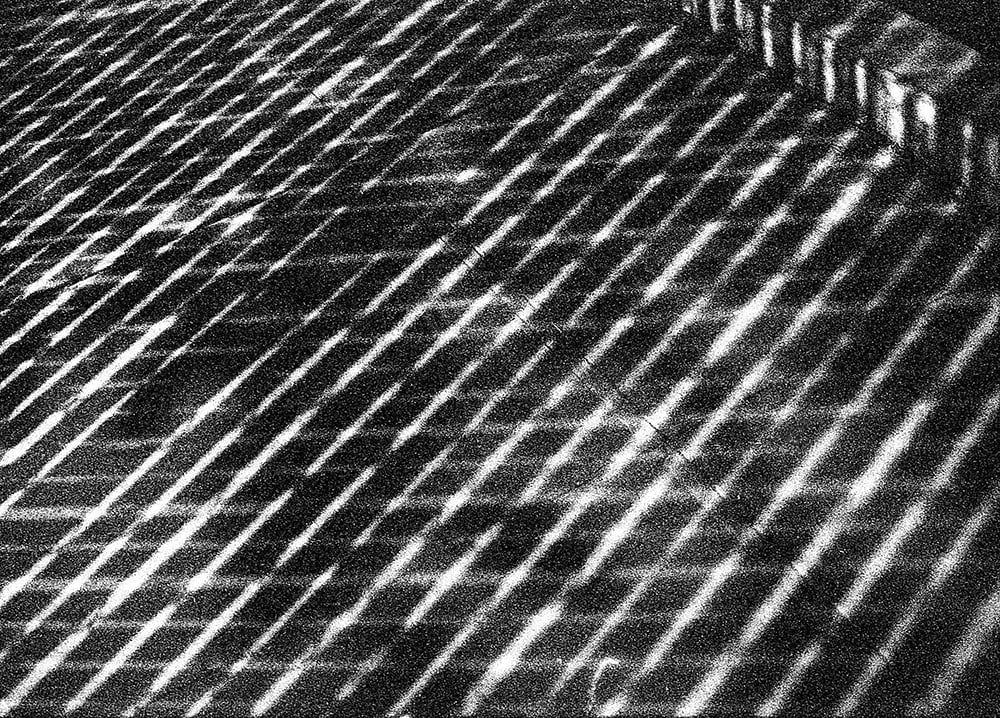

So, you have grain and speed. The third element we love about P3200 is its contrast. T-Max P3200 has dramatic contrast. It is an atmospheric film. Pair it with dramatic light, and the results will be eye-catching. The shadows and highlights on P3200 tend to go toward the extreme, with the shadows getting crunchy and the highlights slipping into bleached white. In good hands, these qualities make for great images; just be mindful that, if the highlights or shadows are important to you, you should meter the image accordingly.
If you have stuck around this long, we’ll treat you to a little historical “bet you didn’t know”. If you have ever wondered why Kodak has never manufactured this emulsion in medium format, well… they did. They actually tried to make P3200 in 120 but ran into technical issues they could not fix.
Apparently, the emulsion of P3200 is so sensitive that the slight lip from where the tape connects the film to the backing paper was causing a slight pressure mark in the first frame. Kodak couldn’t eliminate it and figured they couldn’t market the film as an “11 exposure” roll film, so the idea got axed. But still, thinking about shooting P3200 in 120 keeps us awake some nights considering the possibilities.
So, that is our review of T-Max P3200. It is a film we use when we know we need the speed (low light). Or when we have an itch for grain and grit (texture). Or when we are hoping for a bit more contrast in our images (drama). We love T-Max P3200 and were heartbroken when Kodak discontinued it in 2012, and we were likewise elated when it was reintroduced in 2018. T-Max P3200 was given a reprieve from death, and all of us film photographers have benefited from its returning to the market. So make sure you have taken the chance to try a roll of it.
Hit up Blue Moon’s website via the link or visit our Portland, Oregon-based shop to enjoy a Film Friday discount on this wonderful film. Today only!
Image creditsAll photos are individually credited and come courtesy of Blue Moon Camera and Machine.
This story is brought to you by Blue Moon Camera and Machine in Portland, OR. Blue Moon offers film, development services, printing, and even an ever-rotating line of film cameras and lenses. PetaPixel Members receive 10% off all lab services with Blue Moon: Join today!
Affiliate Disclosure PetaPixel articles may include affiliate links; we may earn a commission if you buy through one.