

Most travel photos fail in a predictable way: you come home with a few polished landmark shots that anyone could have taken, and almost nothing that shows what the trip felt like. The gap between a postcard and a memory comes from choices you make well before you lift the camera, from where you sleep to which lenses ride in your bag.
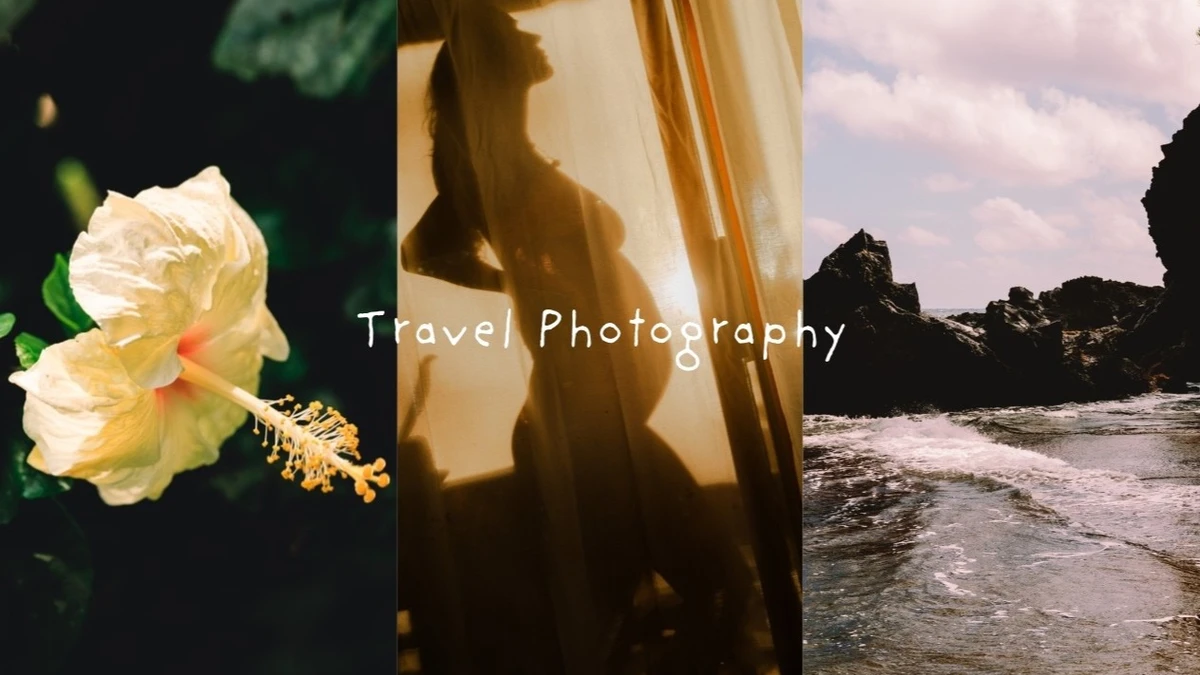
The usual travel advice is to pack one lens and keep it simple, and Samuel Elkins calls that a perfectly good approach before explaining why he rarely follows it. For a week in Maui, part of a two-week trip to Hawaii that also had him photographing hotels, he needed a fairly large Fujifilm GFX kit anyway, and he packed the Fujifilm GF 120mm f/4 R LM OIS WR Macro and the Fujifilm GF 100-200mm f/5.6 R LM OIS WR to go with his wider shots. The long glass paid off at Haleakalā, where he drove up to roughly 10,000 feet for sunrise and found fog sliding in and out above the clouds all morning. Distant rock formations, hard contrast, and big stretches of negative space suit tight framing. Mixing focal lengths, he argues, tells a better story. Once he started pairing macro and tight shots with his wider landscapes, his sets got much more interesting, and he now brings a macro or a tight telephoto on every trip. The macro mattered most this time, and one of his favorite frames from the trip came from it: a single flower in raking light, set against deep green leaves. He calls the macro lens very underrated for travel, though you don’t need his exact setup, just enough options that every photo doesn’t look like it came from the same lens.
His first piece of advice has less to do with gear. Elkins wants you to live the life you’re photographing instead of manufacturing it. He doesn’t rule out staging. He just finds that real moments carry more story and depth, and that you enjoy shooting them more. The Airbnb he chose shows how that works in practice. He booked it for the location, but a photo of sheer curtains on the listing caught his eye, and he saw a chance to photograph his wife, who is expecting a baby in a couple of months, in the morning light pouring through. After that, they simply stayed there like anyone on vacation, with things scattered on the floor and the room looking used. He looks for rentals that feel lived in for exactly this reason. Picking a place to stay turns into a photographic decision you make weeks ahead, and it shapes what happens in front of the lens without you having to arrange anything.
Elkins builds his whole approach around sequences now. He used to do what plenty of people do: haul a tripod to one spot, work hard for a single epic image, and come home with that frame as the trip’s only real result. These days he treats each day as a run of images, so the Maui set moves from the rental house to jungle scenes to portraits of his pregnant wife and back. His last idea is the hardest to put into words. He stopped trying to perfect each scene in camera, fixing the horizon and hunting for the ideal focal length, and started photographing what he saw in his head as quickly as possible. A crooked horizon, a less-than-ideal focal length, or a bit of blur doesn’t bother him, since that kind of perfection can make an image look too perfect when people want photos that feel real. Working that fast depends on knowing your camera. Photographers who change bodies often never really learn how one feels in their hands, and his long run with the GFX system is what lets him get the picture in his head onto the back of the camera fast.
You can see the full Maui sequence, from the curtains at sunrise to the fog on Haleakalā, in the video.