



Long before jazz became a global language, Belgium gave it one of its most recognisable voices. The saxophone, invented by Belgian instrument maker Adolphe Sax, went on to define the sound of jazz. And Brussels, where Sax learned his craft, became one of the first European cities to embrace the new music from America.
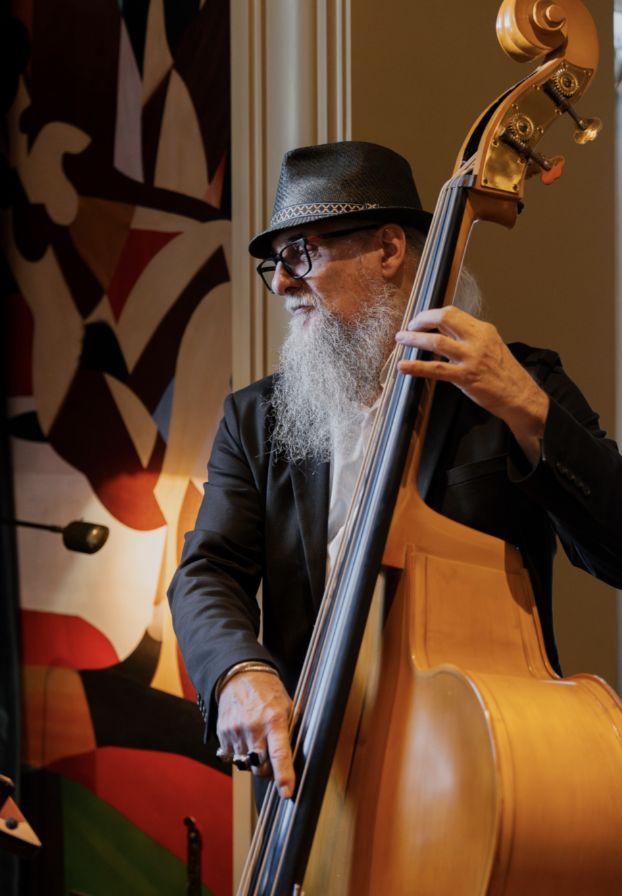
This autumn, Hotel Amigo, a Rocco Forte hotel steps from the Grand Place, celebrates that heritage with a new season of Mix & Melody. The Friday and Saturday live music series at Bar Magritte brings jazz, swing, blues, boogie and Latin rhythms to the heart of the Belgian capital. October’s programme pays tribute to some of the genre’s defining names, from Ella Fitzgerald and Chet Baker to Erroll Garner, Louis Armstrong and Fats Waller.
A Belgian invention that became the voice of jazz Adolphe Sax was born in Dinant, Belgium, in 1814, and trained in his father’s instrument workshop in Brussels. There he began the experiments that led to the saxophone, a brass instrument played with a single reed. He patented it in Paris in 1846.
Sax designed the instrument for military bands and orchestras. He could not have imagined that, decades later, it would carry the improvised solos of Coleman Hawkins, Lester Young and Ben Webster, all three honoured in this season’s Mix & Melody programme. Today the saxophone is perhaps the instrument most closely associated with jazz, and its story begins in Belgium.
Brussels: a cradle of European jazz
Jazz reached Brussels in the early decades of the twentieth century and found a natural home in intimate venues where musicians and audiences gathered close together. Belgium’s contribution soon went far beyond listening:
• Robert Goffin, a Belgian writer, published Aux frontières du jazz in 1932, one of the first serious books ever written about jazz.
• Django Reinhardt, the guitarist who shaped European jazz, was born in Liberchies, Belgium, in 1910.
• Toots Thielemans, born in Brussels in 1922, became one of the world’s great jazz harmonica players and guitarists.
That legacy lives on in the city’s clubs and festivals, and in venues such as Bar Magritte, which pairs Brussels’ jazz heritage with another Belgian icon: the surrealist painter René Magritte.
Where to hear jazz in Brussels today
Brussels’ jazz heritage is not confined to history books. On any given night, visitors can choose from a circle of clubs, most within walking distance of the Grand Place:
• L’Archiduc: an Art Deco bar from 1937 near the Bourse, a jazz institution since the 1950s, where Miles Davis once performed. Jazz every Saturday and Sunday in the late afternoon.
• Sounds Jazz Club: open since 1986 in Ixelles, a benchmark for Belgian and international jazz, known for its lively jam sessions.
• Jazz Station: a listed 19th-century railway station in Saint-Josse, restored in 2005 as a centre for concerts, exhibitions and emerging talent.
• The Music Village: a jazz club in two 17th-century houses near the Grand Place, hosting Belgian and international artists since 2000.
• Toots Jazz Club: named after Toots Thielemans and led by pianist Joachim Caffonnette, a New York-style club steps from the Grand Place.
For larger concerts, Flagey and Bozar host international jazz names through the season. Each May, the Lotto Brussels Jazz Weekend, Belgium’s largest free jazz festival, fills the Grand Place and the city’s squares with more than 100 free concerts.
Mix & Melody: jazz heritage, live in Brussels
At Bar Magritte, the world’s first bar dedicated to René Magritte, jazz takes on an intimate character. The room may be more spacious, and rather less smoky, than the city’s early jazz venues, but the spirit is the same: night owls, jazz lovers and curious travellers, close enough to the musicians to feel every note.
Resident pianist Druss Lecomte, a fixture of Mix & Melody since its beginnings, gave his first concert at seventeen at L’Os à Moelle, one of Brussels’ celebrated music venues. He feels the city’s jazz history every time he plays.
“When I sit here and play this music, I could almost believe that I am the reincarnation of one of those old jazz and boogie musicians,” he says. “Every time I perform, I feel connected to that legacy.” He describes Bar Magritte as “imaginative, elegant and playful”, an experience “somewhere between an intimate jazz club and a live concert”. For an international audience, his message is simple: “Music speaks a universal language. There are no borders, no flags and no barriers.”
The experience extends to the menu. Cocktails arrive in custom glassware inspired by Magritte’s bowler hat and pipe. Signatures include Good Faith, with almond-infused bourbon, Tio Pepe sherry and a touch of mezcal, and Lyricism, with Calvados, pear syrup and pear cider. Small plates blend Brussels and Italy, from mini waffles with salmon and avocado to golden frites and a Dame Blanche waffle.
Mix & Melody takes place every Friday and Saturday evening at Bar Magritte, Hotel Amigo, Brussels.


