

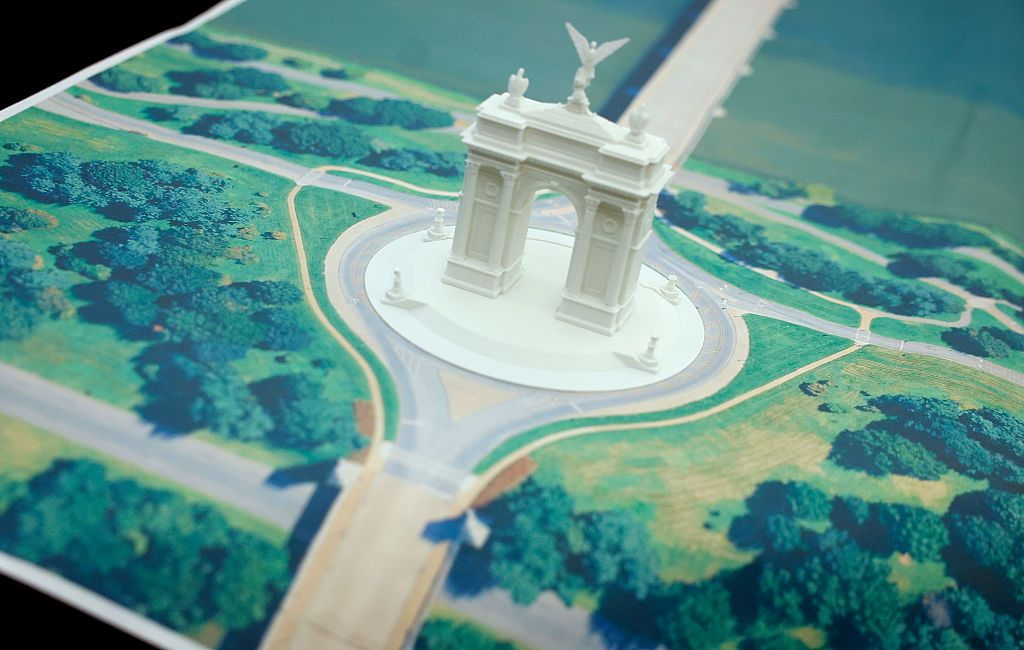
On September 29, the American Institute of Architects (AIA) sent a letter to Jaime Loichinger, director of the Advisory Council on Historic Preservation (ACHP), a federal agency responsible for preserving historic properties and sites in the United States, denouncing the council’s effective resignation from the controversial project.
The letter is critical of ACHP’s September 24 decision to bypass Section 106 of the National Historic Preservation Act ending the Council’s involvement with President Trump’s triumphal arch project. The proposed site for the 250-foot-tall arch is Memorial Circle, nearby Arlington National Cemetery.
The Section 106 process is a key part of ACHP’s work, compelling federal agencies to consider the effects of projects they carry out, approve, or fund on historic properties. Instead, The Architect’s Newspaper wrote, ACHP will bypass Section 106 and communicate directly with Doug Burgum, the US Secretary of the Interior and an ally of President Trump’s, about the controversial project.
AIA’s September 29 letter urges the ACHP to advise Secretary Burgum that the proposed arch “must not proceed” and that the National Park Service should “reconsider the location, scope, and design of the undertaking.” The letter points out many issues related to the proposal, from adverse effects on nearby historic properties to the lack of architectural harmony the design presents within the larger landscape of Washington, D.C.-area monuments.
“Washington’s monuments are not a collection of isolated objects,” the letter states. “A 250-foot permanent arch at the central hinge of this landscape cannot coexist with the rest of the area’s historic sequence, reciprocal views, civic meaning, and solemn function.”
The AIA letter argues that the National Park Service’s decision that alternative locations or designs “would alter the project’s fundamental nature and prevent achievement of its goals” is premature, and encourages the ACHP to consider a genuine analysis of potential other options. ACHP could, for example, suggest something smaller-scale and less visually intrusive, or consider designs that don’t interfere with current sightlines or topography.
The arch project has been in the news since President Trump first mentioned it during a holiday party last December. The Commission of Fine Arts approved the plan in May, despite strident objections from both military veterans and historic preservationists who eventually filed a restraining order last month, halting construction that was to begin in mid-September.