



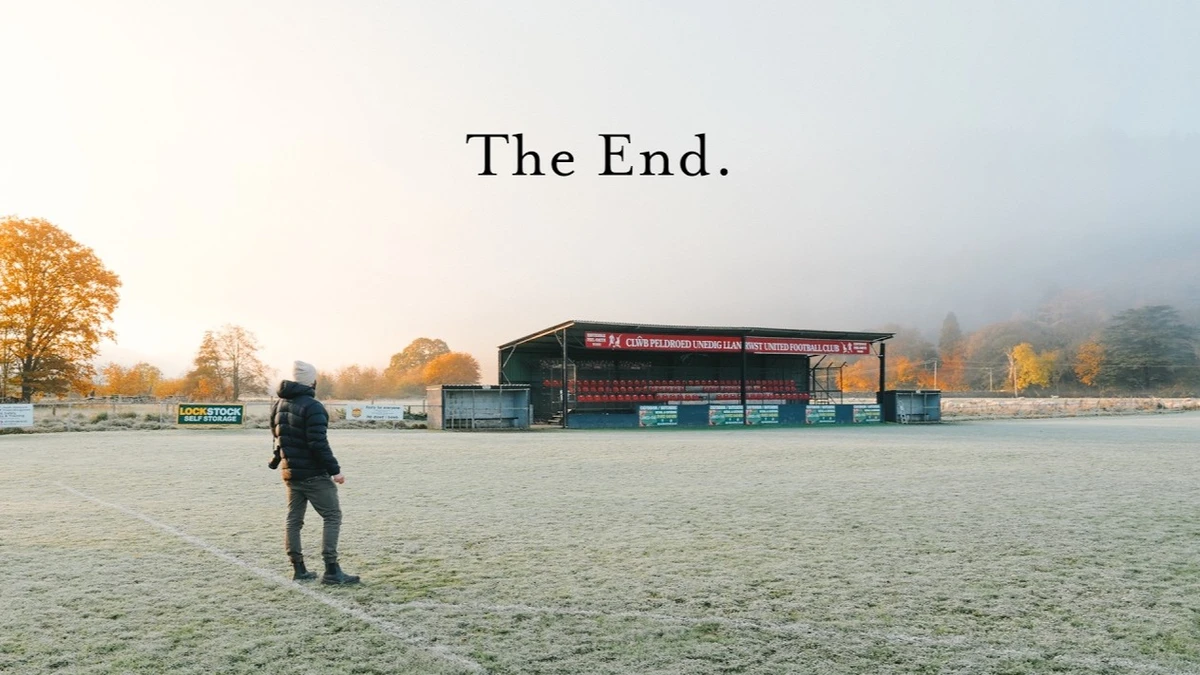
Most landscape work falls into two camps: scenes you stumble into and scenes you return to until the light finally cooperates. The second kind tests your patience, your forecasting, and your willingness to keep showing up for a photo that may never happen.
A dozen visits across a full calendar year went into a single frame of a small-town football stand in North Wales, and James Popsys admits he never expected the chase to last that long. He usually prefers surprises, and he says most of the photos he holds dearest are ones he didn’t know he’d take until seconds before pressing the shutter. This scene was an exception. He first shot it on a freezing January morning with no light, came back in summer to see it in full green, and from there pinned his hopes on autumn. He wanted orange trees, mist or even an inversion, dew on the grass, and treetops on the hill poking above the fog. His one worry was the stand’s red clashing with the orange, though he figured he wouldn’t care much if everything else came together.
He also worked out the geometry. In October, the morning sun comes from a direction that drops the stand’s shadow in front of it and adds depth to the scene. In summer, the shadow would have fallen on the far side. He planned to arrive earlier than on his scouting trips so he could catch first light on the very top trees of the hill, with mist sitting in the far field and leaving the near one clear. Then the forecasts kept missing. One morning promised fog under clear skies and delivered gray cloud with no fog at all, and by New Year’s Eve, he was still standing on the same pitch. He never came on random days, either. Every visit was timed to a forecast that suggested the right conditions.
Why this stand at all? Popsys points to his long-running interest in the relationship between man-made things and the nature around them. He also keeps a note on his phone of project ideas, and one of them is stadiums, or more loosely, places of public gathering, old theaters included. Stadiums live strange lives as buildings. They sit empty most of the time, then fill with very happy or very angry people for a couple of hours before going quiet again. They’re also built to point attention toward something else, which makes the stands themselves an odd and appealing subject. He has a personal tie too, having scored a left-footed screamer into the top corner on that very pitch about two decades ago.
On the frosty final morning, he walks through his compositional checks while staying off the part of the pitch that would be in frame. The left edge of the stand had to sit clear of the trees behind it, with no lines crossing. The right edge needed to stand proud of a second tree line. Shadows set the clock. A couple of days earlier, the sun had climbed high enough to make them distracting, so he had a short window once the hilltop trees came out of the fog. A sign reading “Footy for Everyone” added context but little beauty, and he hadn’t settled what to do with it. A ladder propped against the away dugout also caught his eye, along with a few sheep that kept wandering into the frame.
In the frame he got, the stand is surrounded by mist, so none of its edges compete with anything behind it. Light falls across the stand’s left side while the sun is still low enough to keep harsh shadows off the pitch, and 10 minutes later, he says, it was already too harsh. On the hill, only the very top trees catch light and color, just as he’d imagined. He also kept the photo deliberately imperfect. When conditions are this beautiful, he finds a flawless frame starts to look generated, so he wants something that grounds it in reality. Here, that’s the local butcher’s advertising boards along the pitch, which are a bit random and unevenly spaced, though at least their colors complement the scene. He also left a small bit of tree branch on the left edge instead of cropping or cloning it out.
The one thing he did remove was a sign with text on the left edge of the frame, since text pulls the eye and it sat right at the edge. Cropping tighter would have upset the balance, so he cloned it out reluctantly, by hand, without AI. The ladder turned into a second photo he hadn’t planned: the ladder against the away dugout, sheep crossing the posts behind it, a picture on a sign, another butcher’s sign, and a lone sheep staring at the camera. He likes it almost as much as the main frame and suspects it may become his favorite, precisely because it was unplanned.
Both photos, along with the mornings that didn’t work out, are in the video.


