

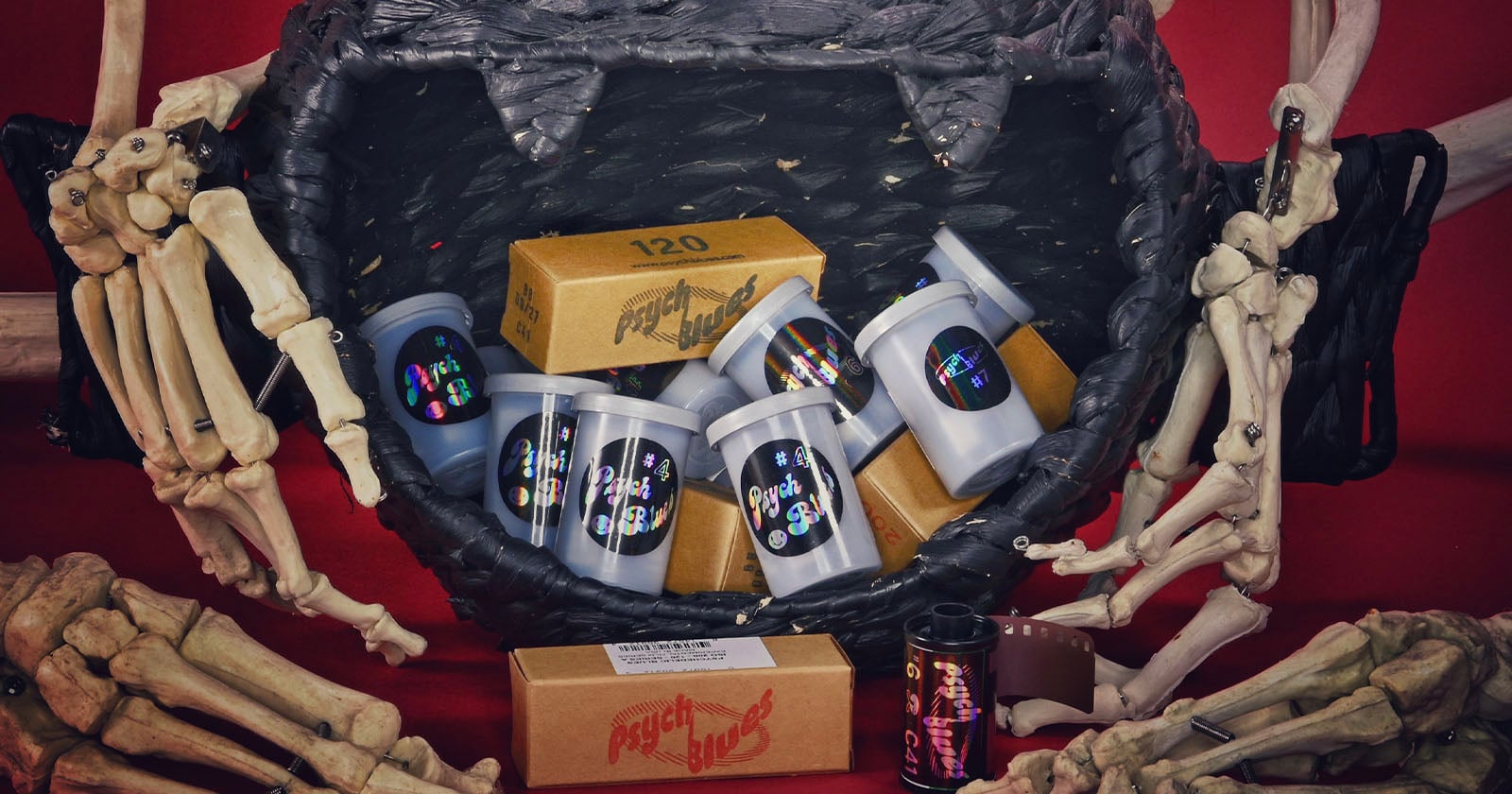
This Film Friday brings you a whole family of fun films with Psychedelic Blues. A great tagline for these experimental films could certainly be “expect the unexpected.” It could also be, “loosen up and have some fun!”
Psychedelic Blues kind of combines both of those ideals, encouraging you to embrace chance and serendipity while also demonstrating that everything you may have once thought could go wrong with film may actually be kind of right in certain situations. So let’s get into looking at these films, shall we?
Psychedelic Blues is a line of small-batch, pre-exposed films produced by Dustin Adams. Dustin publicly launched the first Psychedelic Blues film back in 2016 after having experimented privately for several years prior. Over time, the family has grown to include variants such as Blues #2, #3, #4, #5, #6, #7, and #8. There is also a 120 version labeled as Psychedelic Blues A and even combination batches such as Blues #5/6. Each version produces a different fogging pattern or effect, so it is kind of like standing at the ice cream counter trying to figure out which flavor to indulge in.
In regard to how the films are actually produced, Dustin is understandably a bit cagey about revealing all his secrets, but generally speaking, he is working with Kodak film stock as his base emulsion (generally either Gold or Ultramax for the 35mm versions, or Gold and Portra 400 for the 120 format) and then fogging or exposing the film in a controlled environment before repackaging it and selling it on to all of us. The exact process no doubt differs from type to type, as some Blues films have simple colorful fogging at the edges while others, like Blues #4, are exposed to light reflected off of holographic paper.
Given that the look and feel of these films can vary from type to type, let’s do a quick overview of the variations and what to expect from each. Then we can discuss some overall strategies for having the most fun possible with Psychedelic Blues.
Psychedelic Blues #2
From what we can tell, this was the first Psychedelic Blues film offered on a regular basis. Its effect is the result of hand-fogging the film in a fashion that creates a red/orange bleed emanating from the top of the frame with a corresponding green bleed coming in from the bottom of the frame. The effect for each is generally limited to the top/bottom third of the frame, usually leaving the center relatively untouched, though the fogging varies from frame to frame, roll to roll, and batch to batch, and sometimes bleeds as far as the center of the image.
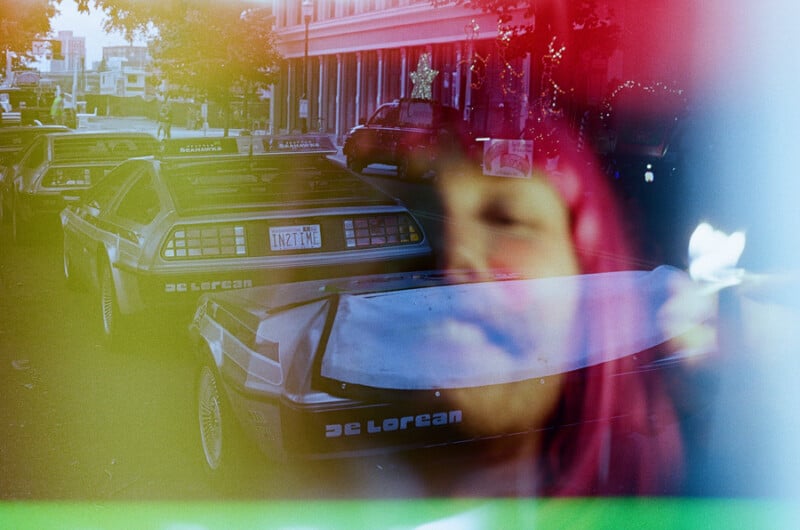
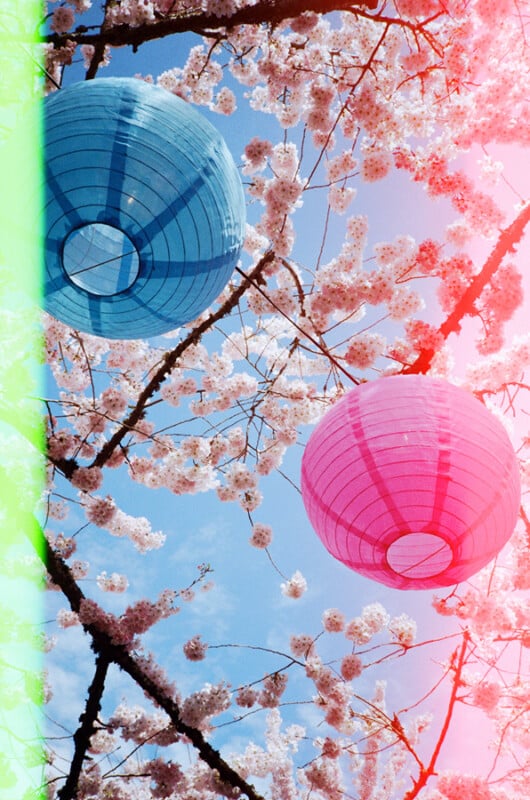
Blues #2 probably looks the closest to traditional film light leaking, especially that of 120 film when it is spooled loosely in-camera, such as by a Holga or Diana. In that sense, it has a weird nostalgic element to its experimental look. It is also well suited to a variety of subject matter, from landscapes to cityscapes to portraiture to weird multiple exposures.
Psychedelic Blues #3
Blues #3 takes a less structured approach compared to Blues #2. With this version, the frames are unpredictably riddled with splashes and splotches of color, varying from red to blue to purple to orange. Similar to Blues #2, the effect hangs out mostly at the edges of the frame, but unlike Blues #2, it commonly ventures into the center area with occasional splashes of color ranging across much of the frame.
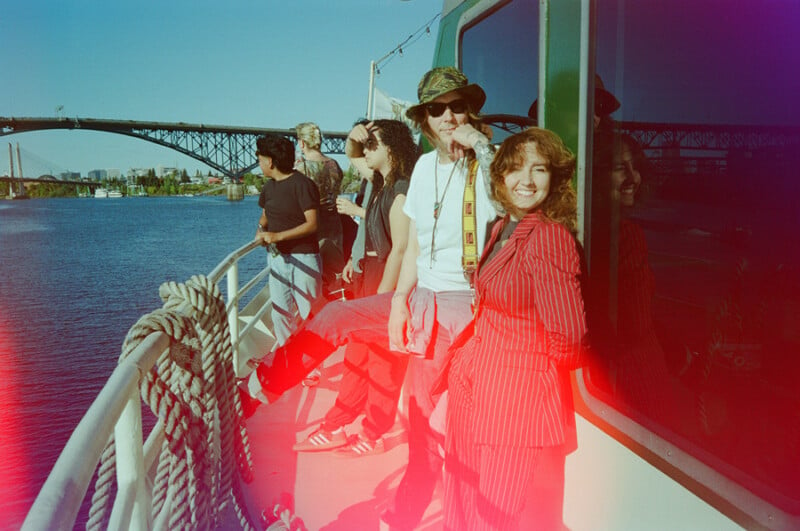
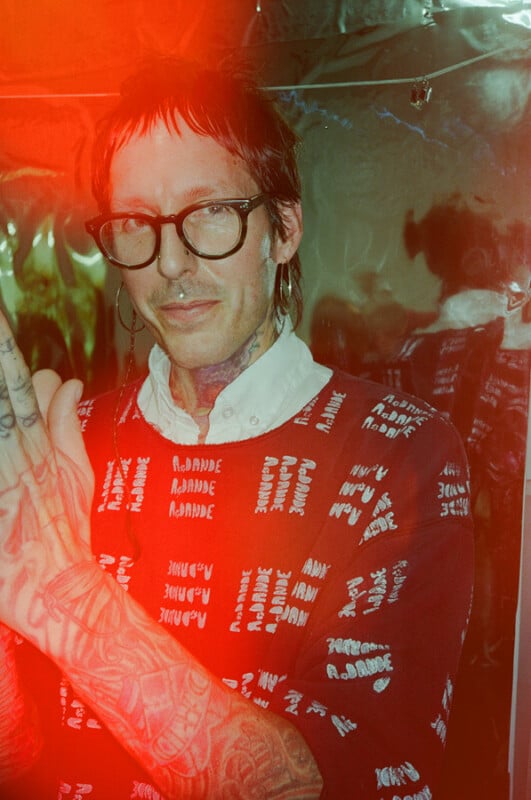
The fogging has a more organic look and feel. The best results we have seen with this film are with simpler compositions with lots of shadow area where the colors of the fogging can really stand out. With more complicated scenes, the fogging can feel a bit busy.
Psychedelic Blues #4
Here is where the Psychedelic Blues line starts to get really fun. Blues #4 is pre-exposed using holographic paper and apparently has been one of the techniques Dustin Adams has been experimenting with the longest, but only made consistent enough to market after the release of Blues #2 and #3. The effect is quite varied, but could be described as splashing your film with rainbow fogging. Beyond that, the effect is very unpredictable, with colors showing up all over the place and changing placement from frame to frame.
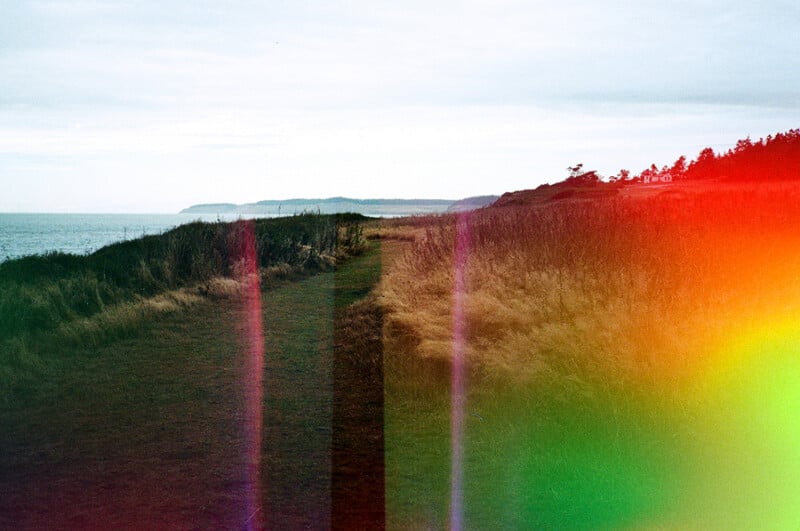
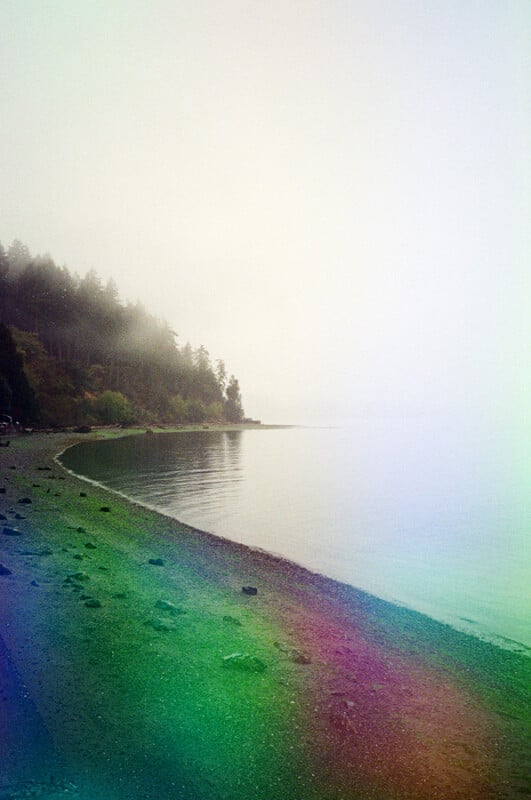
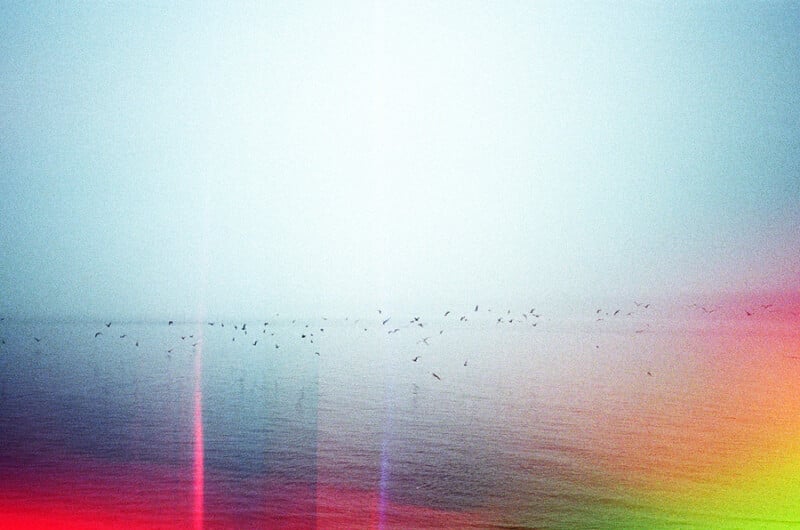
Because of this, it is a good idea to bracket your shots with this film just to have multiple options to pick from when you develop your roll. In terms of which scenes work best, we would kind of say the same thing we did about Blues #3: simpler, cleaner scenes with strong central elements tend to do better. More negative space also gives room for the fogging effect to stand on its own without feeling too busy or cluttered.
Psychedelic Blues #5
Psychedelic Blues #5 kind of rehashes Blues #2, but with a new twist. Once again, the fogging is limited mostly to the edges of the frame, with the color bleed often blowing out the edges then fading off toward the center, leaving the middle of your image nicely framed. But what Blues #5 does differently is occasionally throwing in speckles of color, usually green, that produce a bit of a “galaxy” effect or “radioactive firefly.”
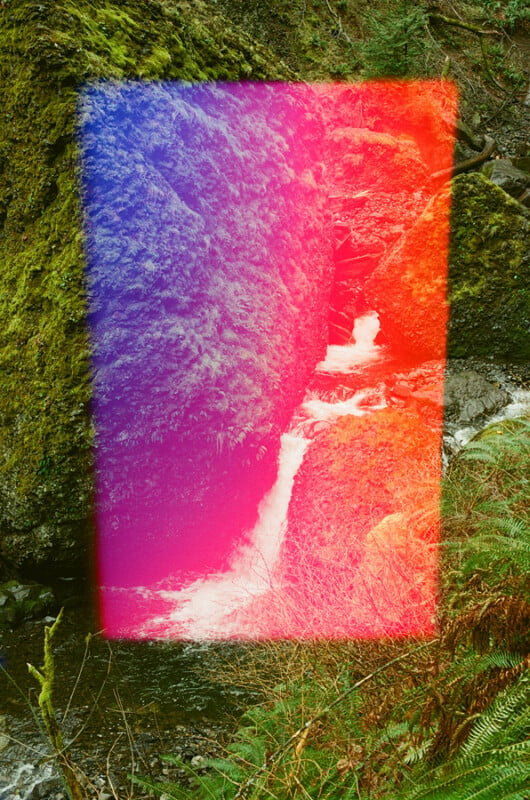
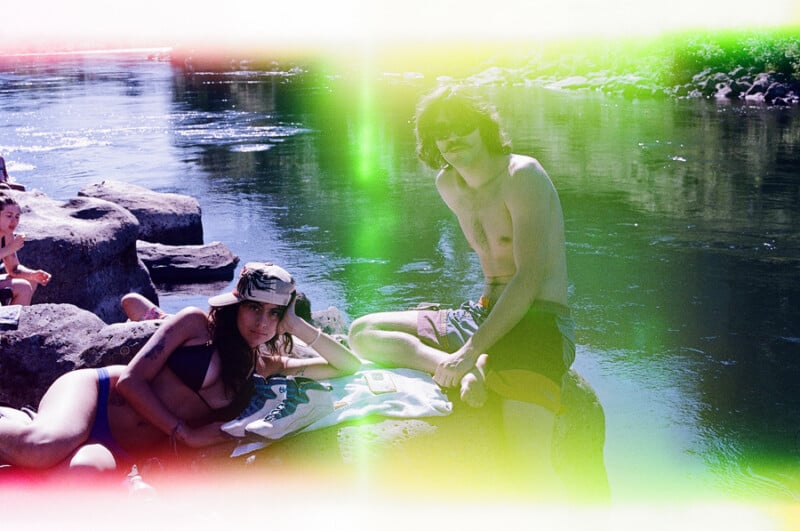
Because the fogging is relatively tight to the edges, Blues #5 does a bit better with busier scenes and is generally good for a variety of subject matter; however, the green speckling really looks its best when shot in low light, such as twilight, nighttime, or dim interiors.
Psychedelic Blues #6
Blues #6 is quite distinct from previous Psychedelic Blues films. Here, the fogging is tightly constrained to circles and windows of color moving through the middle of the frame with occasional splashes of color thrown in for good measure.
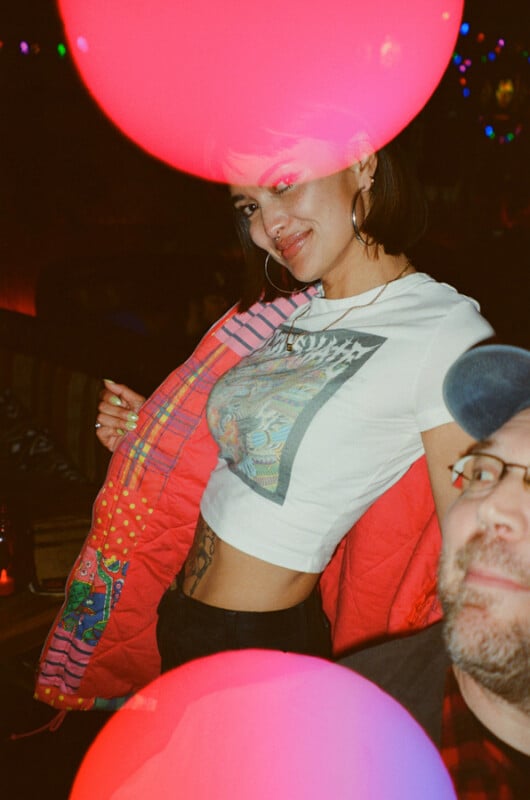
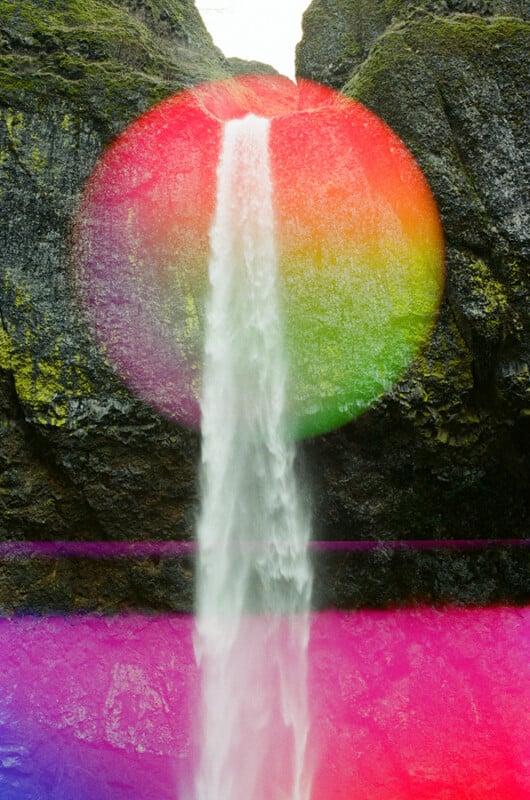
The exact placement of the patches of fogging varies from image to image. Sometimes you get a circle dead smack in the middle of the photo, and sometimes it is a half circle cropped off by the left or right edge of your frame. This is another Psychedelic Blues that benefits from bracketing for that exact reason. Do two or three takes of important compositions to give yourself a variety of fogging placements to choose from.
Psychedelic Blues #7
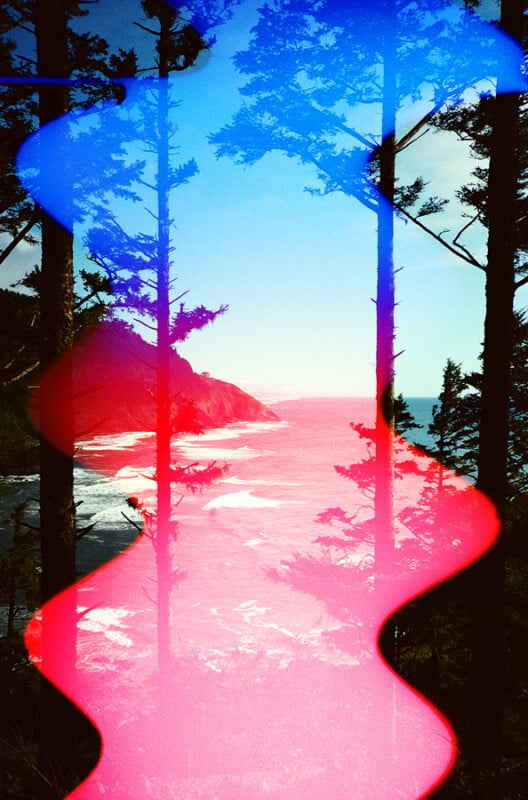
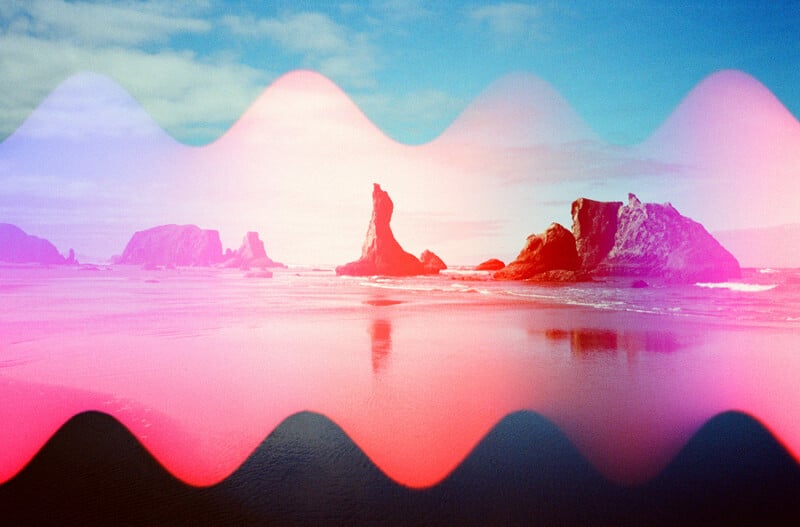
Just when you thought it was safe to go back into the film store, along comes Blues #7. This crazy iteration leaves squiggly waves of color running down the middle of your images. Resembling sine waves, the fogging can range from sharp peaks to gentle rolling waves, while the colors shift through the entire spectrum from red to blue. It is a film that pairs best with scenes that are either very graphic in nature or simpler with more negative space and strong central elements.
Psychedelic Blues A
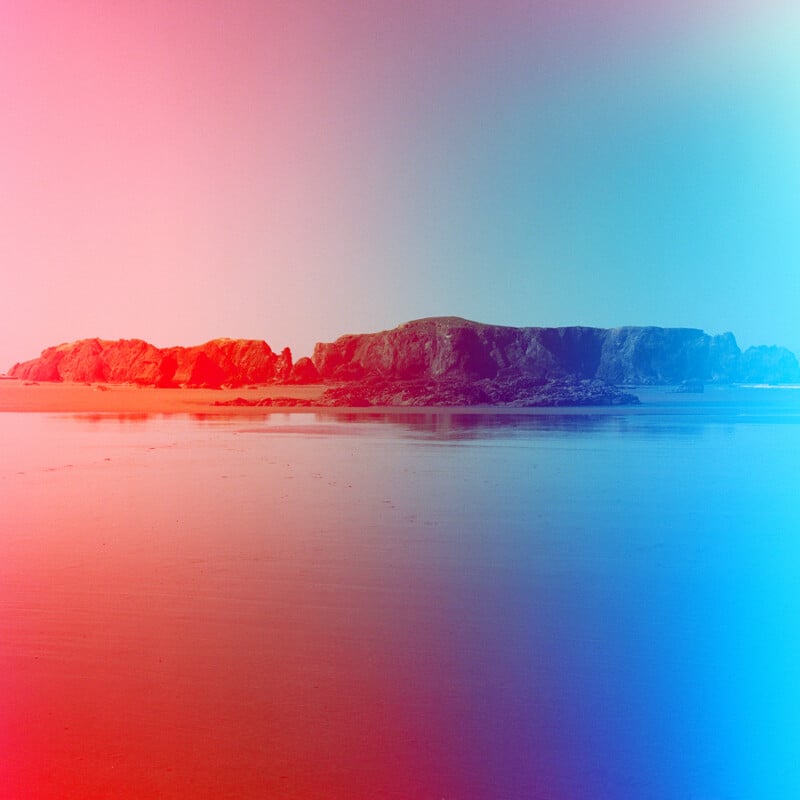
Psychedelic Blues A is the first, and thus far only, form of Psychedelic Blues in 120 format. It features a more mellow fogging heavily steeped in reds and blues that originate at the edges of the frame but fade in all the way to the middle. Here and there you get hints of pinks and greens, just for variety.
That covers the majority of the Psychedelic Blues films currently available, though it is not an exhaustive overview. There is a Blues #8 and a combination Blues #5/6 that we have not had our hands on yet. Once we have a chance to try those films, we will be sure to add them to this list.
As promised, let’s round up with some general tips and tricks. Psychedelic Blues is available in both ISO 200 and 400 speeds. The ISO 200 uses Kodak Gold 200 as the base film, while ISO 400 is Kodak Ultramax (except in 120 where it is Portra 400). Because the 35mm version uses these consumer emulsions, it is worth noting that it is naturally going to have visible grain. The fogging treatment seems to accentuate the visibility of the grain even more, giving Psychedelic Blues a definite gritty look. Psychedelic Blues A, being a medium format film and with the ISO 400 using Kodak Portra, is naturally finer grained in its appearance, but keep the graininess in mind when shooting the 35mm format. Also, the fogging of the film does affect its sensitivity somewhat. While nominally an ISO 200 or 400 stock, it responds a bit slower post-fogging. This leads Psychedelic Blues to easily underexpose. This can sometimes be a good thing as the deeper shadows can help make the colorful fogging pop more. But at the same time, it is not a bad idea to perhaps rate this film a stop slower or use it with a strong flash to help ensure good exposures with nice contrast.
As we noted in a couple of the descriptions for the individual types above, Psychedelic Blues really appreciates bracketing. We don’t mean this in the usual exposure sense, though you can do that too, but rather making multiple, redundant exposures of the same scene. Since the fogging varies from frame to frame, having multiple shots of the same composition will ultimately produce different results. In one frame, the colorful circle may be right in the middle, and in the next, there is a red window of fogging leading in from the edge. It is less film-efficient—and this is a relatively expensive film to be less efficient with—but the multitude of options on the tail end of processing will give you more opportunity to pick favorites.
We would also be remiss not to talk about scanning and printing of this film. Fogging such as this can wreak havoc with the automated calculations of film scanners. If you are scanning Psychedelic Blues at home, you will notice this right away, but you’ll also be able to apply any adjustments immediately. If you are having your film scanned at a lab, then your mileage can really vary depending on how much attention your lab is paying and how much time and effort they are willing to put into adjusting scanner corrections. This is not a knock against labs that don’t do this, mind you, but scanning this film really can be tricky. Film scanners prescan a frame of film and gauge automatic corrections based largely on what they see in the frame. If that frame has heavy red fogging bleeding across it, they often will try to compensate for it by introducing a significant cyan color cast. Many labs rely heavily on this automation to help keep labor costs and hence retail prices lower, but this will result in images with heavy off-color casts. More professional labs generally incorporate more human intervention in their scanning, like we do, where a scanning technician reviews the initial scanner settings and corrects them to produce more accurate images, or they correct post-scan to eliminate unintended color casts. The YMMV aspect of film scanning is always true, of course, but much more so with experimental films like Psychedelic Blues. Just keep that in mind.
Finally, we have to close this review on a philosophical note. The look of Psychedelic Blues is certainly not going to be for every photographer. But as a photographer, or a creative individual if you will, we think it is important to remember that adding some unpredictability and experimentation into your creative process is a very healthy thing to do. It is easy to adopt a mentality that an art like photography should only be done in certain ways, whether those are ways we have defined for ourselves through time and experience, or have been defined for us by teachers, peers, or social media. It is a good thing to make a point now and again to let go of those preconceptions and strike out into unknown territory just to see what you find. The worst thing that happens is you find nothing and you are out the cost of a roll of film. But the best thing that happens is you learn something new or create something you never thought or imagined you would. These are the moments that broaden our creative horizons. This is the path that a film like Psychedelic Blues offers up; whether we decide to go down that path to see what is around the bend is up to us.
We are going to have all the Psychedelic Blues on sale today, just in time to stock up for the Halloween weekend! Hit our online shop, or visit our store in St. Johns, Portland, Oregon to get a few rolls of this crazy film for yourself.
Image creditsAll photos are individually credited and come courtesy of Blue Moon Camera and Machine.
This story is brought to you by Blue Moon Camera and Machine in Portland, OR. Blue Moon offers film, development services, printing, and even an ever-rotating line of film cameras and lenses. PetaPixel Members receive 10% off all lab services with Blue Moon: Join today! This story is also published here.
Affiliate Disclosure
PetaPixel articles may include affiliate links; we may earn a commission if you buy through one.