

A year after reopening as an eco-conscious lifestyle resort, Eri Maldives is making its mark through its house reef, informal hospitality and intimate island atmosphere. For General Manager Haroon Mohamed, it is also an opportunity to bring two decades of international experience home.
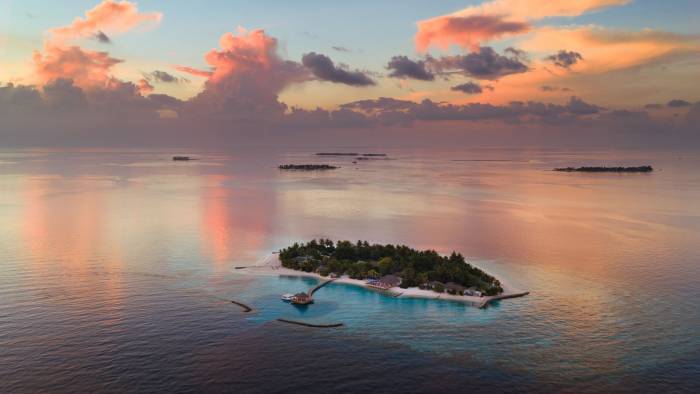
There is a particular kind of stillness to the Maldives at dawn. The sea lies flat as a mirror, the horizon dissolves into the sky, and the islands appear to float on the surface of the Indian Ocean. From a boat, the archipelago reveals itself as a string of improbable worlds: a narrow sandbank fringed with palms, a densely planted island, a resort taking shape over the water. Beneath the changing surface lies another landscape entirely, alive with coral, fish and the movement of the reef.
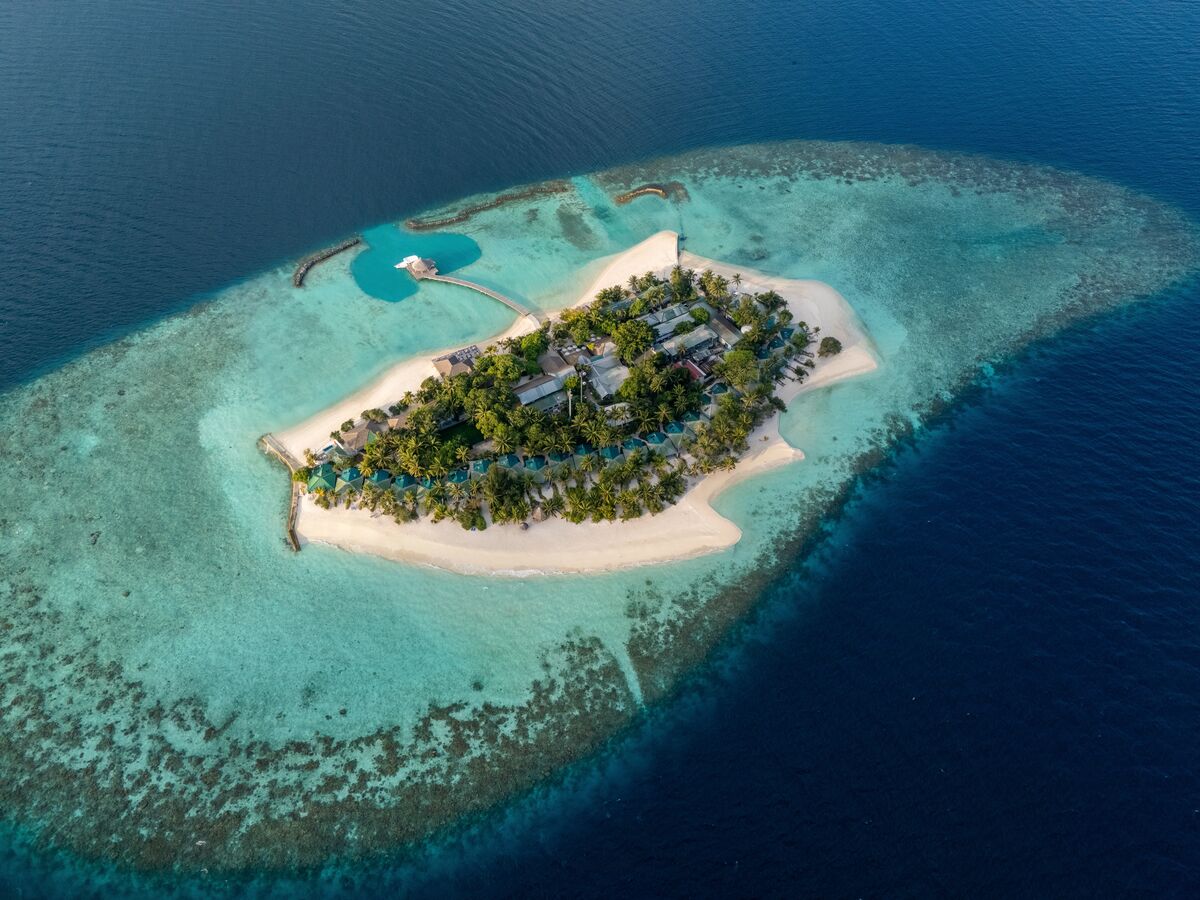
At Eri Maldives, the invitation is to slow down enough to notice these things. Situated in North Malé Atoll, around 45 minutes by speedboat from Velana International Airport, Eri reopened in November 2025 following a rebranding by Pulse Resorts, led by its General Manager, Haroon Mohamed. Its identity is built around an appealing combination: the natural richness of the Maldives, an active programme of ocean experiences, and an informal, sociable style of hospitality.
As Eri approaches its first anniversary, the property offers a useful case study in a destination negotiating its own evolution. How can the Maldives extend its appeal beyond the familiar image of the private island honeymoon? And how can resorts continue to grow while protecting the fragile marine environments on which their appeal depends? At Eri, those questions begin with the island itself.
A reef on the doorstep
The traditional picture of a Maldivian holiday is often one of secluded luxury: an overwater villa, a private pool, an uninterrupted horizon. Eri offers access to the same extraordinary natural setting, but its character is more relaxed and participatory.
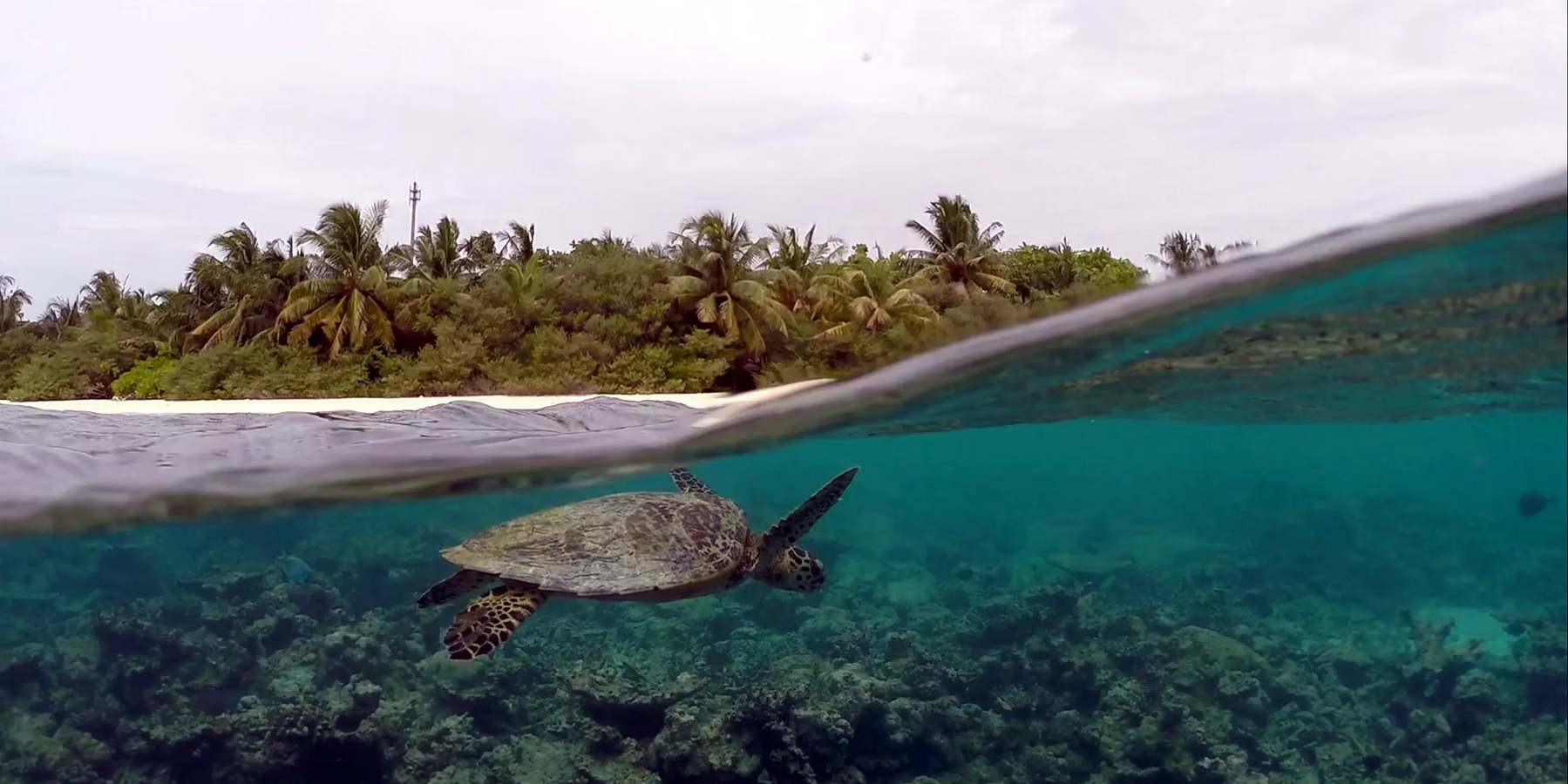
At Eri, the underwater world is not reserved for those who book an excursion. The house reef begins just off the beach, making it possible to pick up a mask and snorkel and head into the water whenever the mood takes you. For those new to snorkelling or diving, lessons offer an accessible introduction; for experienced divers, Euro-Divers runs daily boat trips to more than 40 nearby dive sites across North Malé Atoll.
On the itinerary, a morning can begin with stretching before breakfast, followed by a kayak excursion. Another day might bring paddleboarding, a guided house-reef snorkel or a dolphin cruise. The programme leaves room for something equally important: doing very little.
There is a pleasing contrast between the energy of the activities and the weightlessness of floating in the sea. Beneath the surface, sunlight breaks into shifting, prismatic patterns. Colourful fish move through the coral, and the reef becomes a living landscape.
Back on land, the island has its own small dramas. A heron surveys its territory; crows and other birds move about with apparent purpose; blacktip reef sharks patrol the shallows. The animals seem to belong to a parallel island society, going about their business alongside the guests in unlikely Disney-like groupings. It is an experience that makes the destination feel like an ecosystem in which visitors are temporary participants.
Five dimensions of island life
Eri describes its identity through five dimensions: Earth, Ocean, Culture, Spirit and Community. The language may be aspirational, but the intention is clear: to bring together the natural environment, Maldivian heritage, wellbeing and the social experience of staying on a small island.
The cultural garden is one expression of that ambition where guests can encounter Maldivian traditions through cultural activities and events, giving visitors a way to engage with the place beyond its scenery.
The approach also informs the resort’s atmosphere. There is no need to fill every hour. A morning might begin with stretching, move into kayaking or snorkelling, and end with a massage at Eskape Spa. Or the plan might dissolve altogether, leaving a long lunch, a swim and an afternoon watching the sea.
This balance between activity and stillness feels central to Eri’s appeal. It offers plenty to do, but it also makes space for the pleasure of doing less.
Bringing experience home
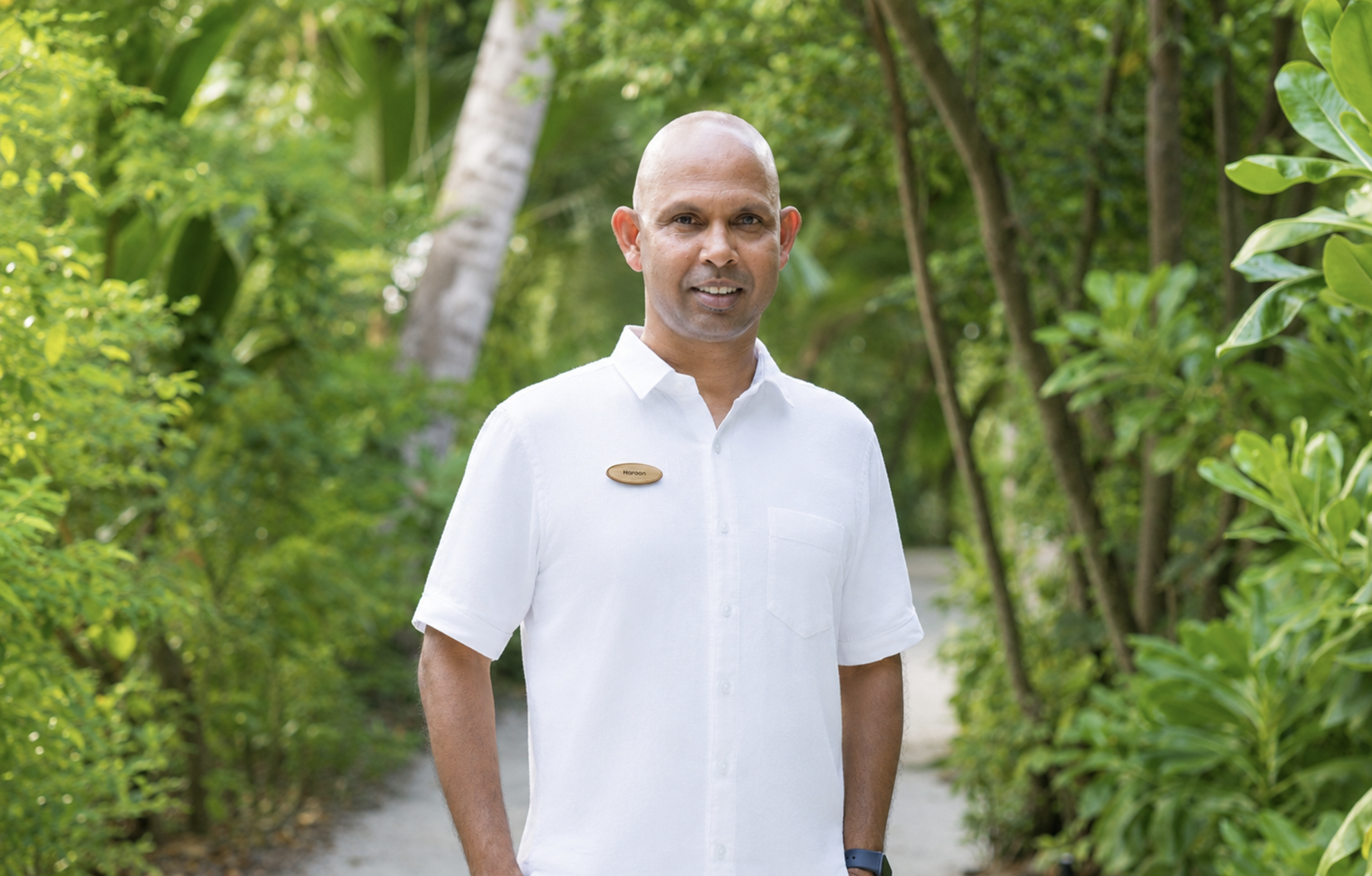
For Haroon Mohamed, Eri is also a personal milestone. A Maldivian from Dhiggaru in Meemu Atoll, he has spent more than two decades working across international hospitality, progressing through operational roles into senior leadership. His career has included positions with Marriott International, Four Seasons and Soneva, as well as senior roles at Le Méridien Maldives Resort & Spa and W Maldives.
Before joining Eri, he was Cluster Hotel Manager for Marriott International at Sindalah Island, NEOM, overseeing pre-opening preparations for four luxury properties. His experience also includes assignments connected with major resort openings across the Maldives, Saudi Arabia, Qatar and Malaysia.
That background brings an international perspective to a property rooted in the Maldivian island experience. Yet returning home has a significance beyond the professional.
“It feels great to bring this home to the Maldives,” Mohamed said. “Not only am I closer to my family, but it is an opportunity to bring my background home and develop something from the ground up.”
At Eri, that means shaping both the guest experience but the culture behind it: the way the team works together, the relationship between staff and visitors, and the details that give a relatively small resort its own identity, such as murals by local artists.
Mohamed describes a sense of continuity among employees, some of whom worked on the island before the rebrand. Their familiarity with the property helps create an atmosphere that feels established.
“Some of the staff have been on the island for many years, before the rebrand,” he said. “That helps create this sense of warmth and community, almost like a family.”
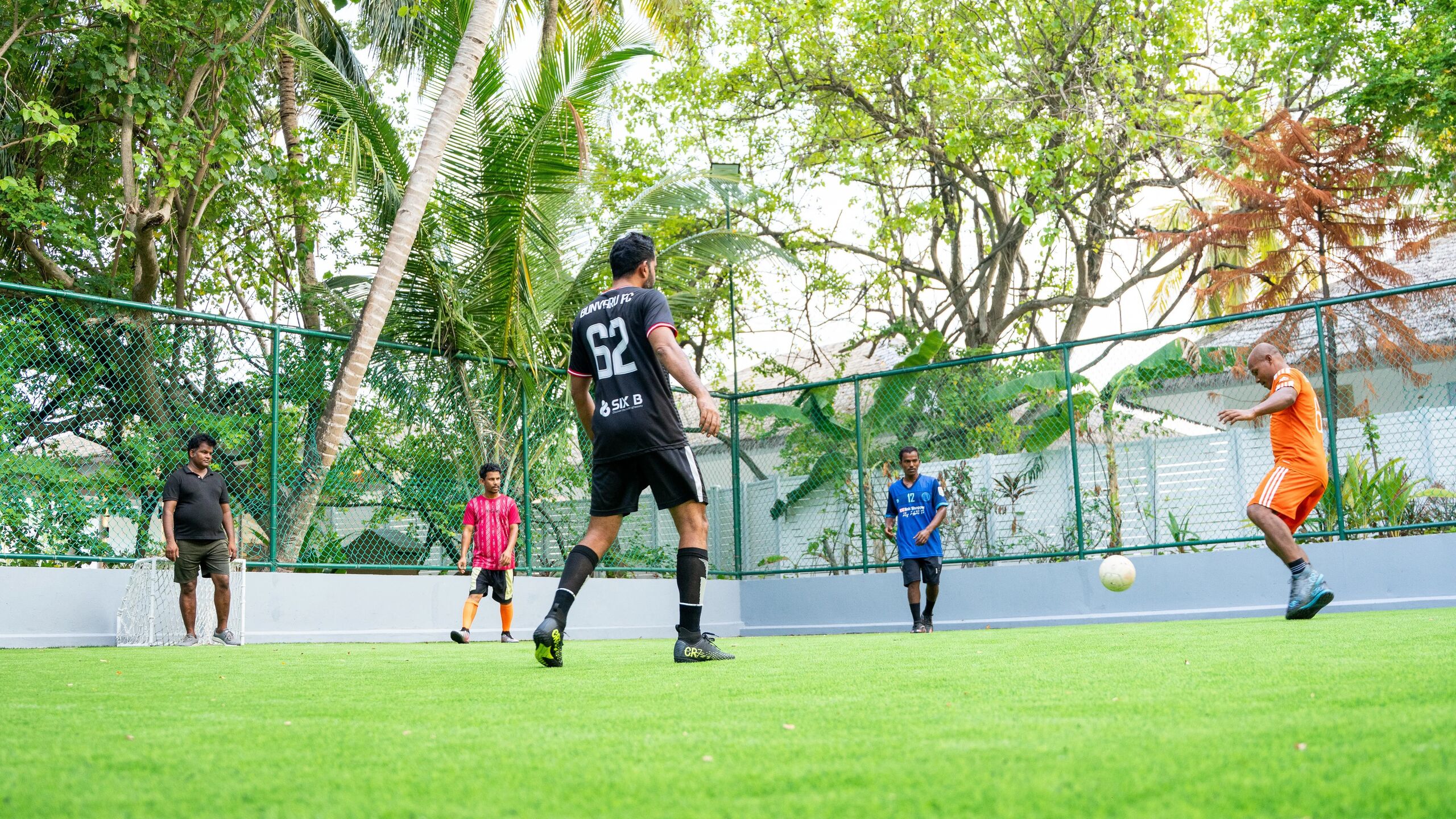
The distinction is visible in the social life of the resort. Staff make an effort to learn guests’ names and preferences, join in with activities and entertainment, and share experiences rather than remaining separate from them. Regular football matches between employees and guests is just one example.
The result is a style of hospitality that feels personal without being overly formal. In a smaller property, familiar faces become part of the rhythm of the day; a greeting or a remembered preference creating moments of connection.
For Mohamed, the scale also creates flexibility. As he puts it, “we can be flexible to the needs of the guests and the weather because of our size”. That adaptability is particularly valuable in an island environment, where the sea and sky dictate the possibilities of the day.
Sustainability as a daily practice
In the Maldives, sustainability cannot be separated from the practicalities of island life. Supplies arrive by boat; energy and water require infrastructure; and the marine environment is central to the destination’s appeal.
Eri’s stated measures include glass water bottles under the Pulse brand, solar-powered water heating and reef-awareness initiatives. Its small scale also allows a degree of flexibility in how the guest experience is organised, while its connection to the wider Pulse group provides logistical support behind the scenes.
These measures are specific and tangible, although they are only one part of a much larger environmental challenge. The resort’s positioning around conscious travel is most convincing when experienced through the details: the proximity of the reef, the opportunity to learn about the marine environment, and the relationship between island life and the natural world beyond the beach. For guests, that relationship need not involve a formal lesson or a scheduled excursion. Sometimes it begins simply by stepping into the water and seeing what is there.
Water, energy, waste and transport all require attention. Supplies must arrive by boat, and islands often need their own infrastructure for power generation and desalination. The environmental footprint of tourism is therefore inseparable from the logistics that make the guest experience possible.
The wider challenge was articulated by Abdulla Yasir, CEO and Managing Director of Visit Maldives Corporation, when I spoke to him at Arabian Travel Market earlier this year. “Maldives has all along been playing on the sustainability card actually,” Yasir said. “Our whole product is actually in the making from a sustainable perspective, very much integrated.”He also highlighted the realities of island infrastructure, from power generation to desalination, and the need to account for environmental factors as resorts develop. Then came a question that captures the tension facing the destination: “How do you keep the cake and eat the cake?”
It is a question without an easy answer. Tourism supports livelihoods and national prosperity, yet the natural environment that draws visitors is vulnerable to the cumulative effects of development and consumption.
From a boat, the tension is tangible. Some islands remain little more than a sweep of sand and palms; others are dense networks of villas, jetties and structures extending over the water. Construction sites sit alongside established resorts. The view is beautiful, but it also reveals how actively the archipelago is being transformed.
For individual properties, sustainability cannot resolve every challenge facing the country. It can, however, be made tangible through the choices that shape daily operations and the relationship guests develop with the environment around them. At Eri, nature is part of the experience, and a reminder of what needs protecting.
A destination expanding its horizons
Eri’s approach sits within a broader shift in how the Maldives is presenting itself to international travellers. For years, the destination has been closely associated with honeymooners and high-end resort stays. That reputation remains valuable, but tourism leaders are increasingly keen to demonstrate the breadth of experiences available, from family holidays and adventure to culture, cuisine and more active encounters with the islands.
Yasir described the Maldives’ appeal as extending beyond its familiar natural imagery: “We have always been very authentic in our offerings. Maldives is very well known for sun, sea, and sand. But also beyond that, I think beyond the narrative, we also offer safety and security.”
Visit Maldives has also been working to rebuild momentum in the Middle Eastern market following disruption earlier in 2026, while strengthening airline and travel-trade partnerships and looking towards new promotional activity in 2027. The ambition is to reach travellers who might not previously have considered the Maldives, or who associate it with only one kind of holiday. As Visit Maldives Senior Manager of Destination Marketing Aminath Shathura told me at ATM, the organisation wants people to recognise it as “a family destination also as an adventure tourism promotion destination”.
Eri’s combination of reef experiences, watersports, social activities and wellness fits naturally within that wider proposition. It gives guests reasons to engage with the island throughout their stay, while allowing the experience to remain as active or unhurried as they choose. It also demonstrates that a resort’s identity can be shaped by its atmosphere as much as its facilities. Eri’s appeal lies partly in its informality: the familiarity of the staff, the shared activities and the sense that guests can move easily between ocean adventures, communal spaces and quieter moments of retreat.
The pleasure of letting go
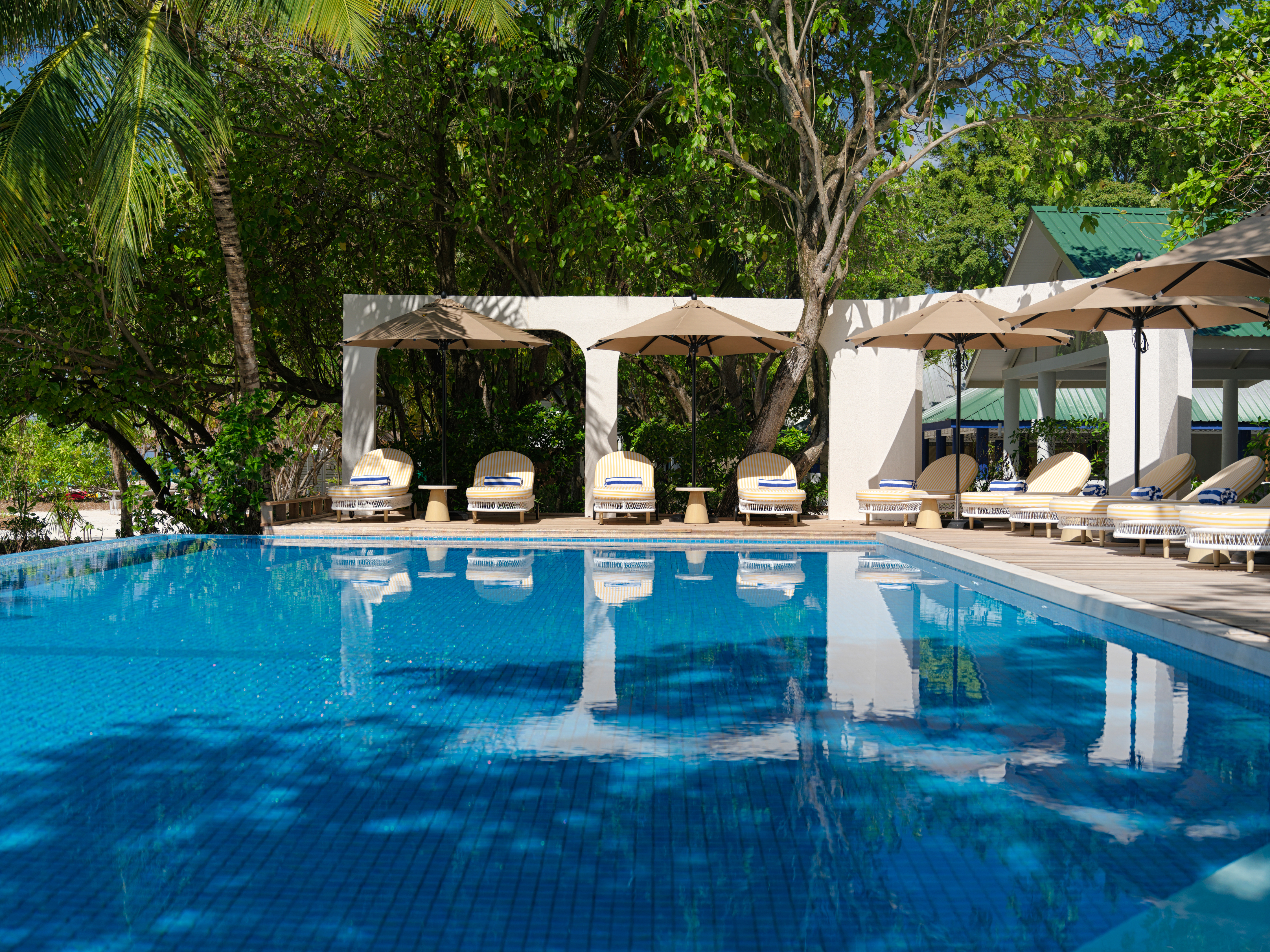
A stay in the Maldives can be full of scheduled experiences. There are excursions to catch, activities to book, treatments to enjoy and meals to plan. Even a destination associated with escape can become another exercise in optimisation. Yet the most memorable moments often arrive when the schedule falls away.
At Eskape Spa, the pace changes. After days spent in and on the water, a massage becomes a welcome counterpoint to the physical activity: a chance to let the body settle and the mind become quiet. The sensation is less about adding another experience to the itinerary than allowing everything else to recede.
The same is true of the hours between activities. Shoes, makeup and the small routines of everyday life gradually lose their importance. The day becomes a sequence of simpler pleasures: walking from the beach to lunch, watching the reef, recognising the same staff and animals, or lingering as the light changes.
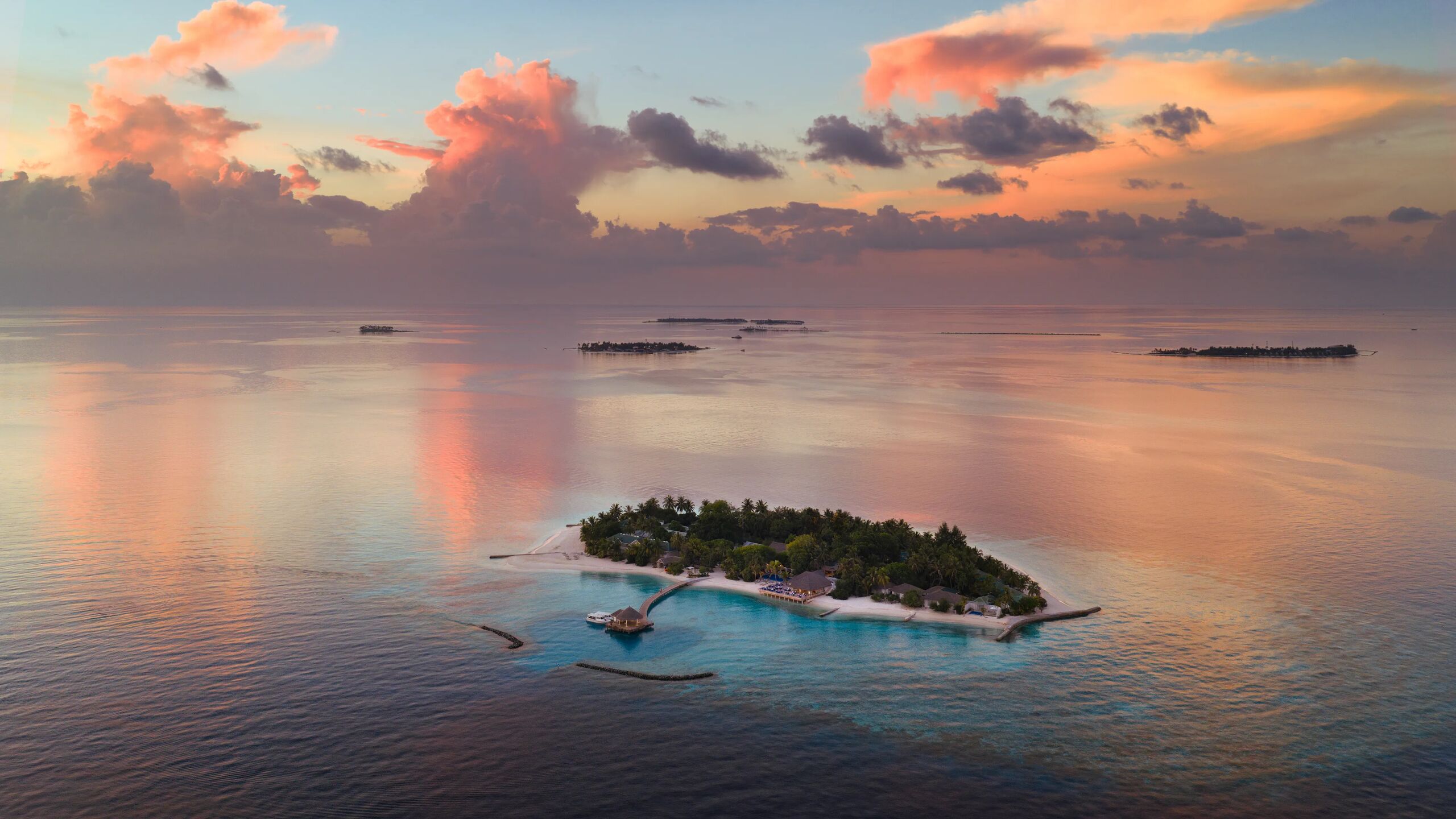
One evening, the setting sun breaks through bands of cloud, turning the horizon from soft gradients into sudden flames of red. The sea undulates beneath it, each wave catching the last light before dissolving into darkness. The scene is spectacular, but its power lies in its impermanence. There is no way to hold it in place or guarantee that the next evening will look the same.
A year into its next chapter
Eri’s first year has taken place against a challenging backdrop for international tourism, yet Mohamed reports a strong first season. “We had a very good first season in terms of occupancy in a difficult year,” he said. “We have guests that come back again and again.”
Repeat visitors are an important signal for a resort still establishing its identity. They suggest that the experience has made a sufficient impression to bring people back, beyond the immediate appeal of the destination itself.
For Mohamed, the task now is to build on that foundation: maintaining the warmth of the team, developing the property’s offer and ensuring that its character remains clear as it grows.
The Maldives will continue to face difficult questions about development, connectivity and environmental protection. Resorts such as Eri are only one part of that much larger picture. But they provide a close-up view of how the country’s tourism proposition is changing: towards more varied experiences, a more informal relationship between guests and staff, and a growing recognition that the natural environment is central to the product.
As the light fades over North Malé Atoll, the islands become silhouettes against the evening sky. From the boat, the sea is still shifting, reflecting the last colour of the sunset. Eri, despite its recent transformation, already feels embedded in this familiar rhythm of water, light and life.
Its first year has been about establishing a place in the Maldives’ evolving tourism landscape. The future will be about deepening that identity: creating experiences that bring people closer to the island, its people and the reef that surrounds it.
For a destination that invites you to leave the world behind, Eri offers something more enduring: the chance to slow down, look closer and find yourself immersed and present in the living world of the island, from the reef just beyond the shore to the last light fading across the sea.