



By
Bloomberg
Published
July 24, 2026
The World Cup was Nike’s to lose to Adidas. After a final between Spain and Argentina- two teams wearing the German company’s three-stripe logos on their kits- it did.
Nike’s boss Elliott Hill bet big on this year’s US tournament to turbocharge his football business, and his turnaround plan for the American sportswear giant. So its absence from the final wasn’t ideal. The firm’s soccer chief Camilo Andrade wrote in a memo: “I know the ending was not what we dreamed.”
Adidas will be able to point to all the ways it outplayed Nike when it announces second-quarter earnings next week. As for Hill, he has to go back to the drawing board. There were flashes of his company’s past brilliance, such as its Rip the Script World Cup advertising campaign. He must build on these flourishes, and learn lessons from his rival.
It wasn’t even the German kit-maker’s sponsorship of victors Spain and runners-up Argentina that appears to have paid off the most. Demand for the shirts of one of the co-host nations, Mexico, was rampant, according to StockX, a popular auction site for high-demand consumer goods.
Adidas expects overall sales related to the World Cup of about €1.5 billion ($1.7 billion), including football-inspired streetwear, up from a previous projection of roughly €1 billion. It sold four times as many jerseys as the last tournament in 2022, and twice as many balls. Nike didn’t put a figure on its World Cup revenue, saying only that it sold twice as many national team kits as in 2022, including collaborations with other companies.
The volume of sales of Adidas products in StockX’s top-25 list of World Cup best-sellers was more than 30% higher than Nike’s over the course of the tournament. Adidas was ahead in sheer team loyalty, particularly around its sponsorship of Mexico and Spain.
Adidas also eventually won the tournament on social media, although by some measures that was a slimmer victory. Taking account of voices on various forms of online media, including the company’s own sites, partners, influencers and celebrities, Adidas generated $129.5 million of brand value over the course of the World Cup, against Nike’s $119.3 million, according to the data crunchers at Launchmetrics. Nike actually took the lead in value creation in the early days of the tournament. Having two Adidas teams make it to the final put paid to that.
Still, there were bright spots for Nike. It regained some cultural clout through the clever World Cup collaborations it did for seven of the teams it sponsored, including England’s tie-up with skateboard brand Palace and France’s with designer Jacquemus. While Adidas’ Mexico shirts dominated StockX’s list of the top-10 hottest tournament products, its top-25 was more evenly spread.
It was honours even as well with the two real breakout stars of the World Cup: England’s Jude Bellingham and Norway’s Erling Haaland.
Adidas had the foresight to sign Bellingham when he was a teen playing for England’s Birmingham City. Now at Real Madrid, the past few weeks have made him a world star. He appeared with Spain’s Lamine Yamal and Argentinian great Lionel Messi in Adidas’s promotional film Backyard Legends.
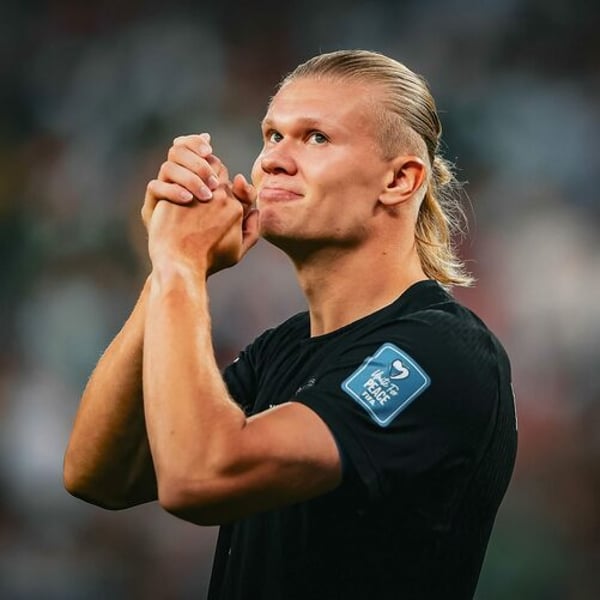
Perhaps the biggest surprise, though, was how Haaland connected with fans, particularly Americans. Norway is sponsored by Nike and Haaland wears its Phantom boot. He also starred in Nike’s Rip the Script advert, the tournament’s most successful promotion in terms of creating brand buzz. The US company had the good fortune of getting the fearsome, yet likeable, Haaland to take the film’s final kick.
And while Adidas won on most measures, Nike can also cling to the fact that it isn’t always the most successful teams that are the most popular.
As my colleague Howard Chua-Eoan has noted, the World Cup cemented the football trend for “hate-watching,” whereby fans of eliminated teams root against their rivals. Argentina’s roughhouse tactics didn’t win them any friends. And although the match for third place between Nike-sponsored England and France had a sense of being an exhibition match, it was a 6-4 thriller- and a much better advert for football’s charms than Spain’s ugly 1-0 scrap against the petulant Argentina team.
Nike must build on any such positives, and learn lessons. Adidas appeared to benefit from launching its World Cup campaign and having stock in stores early. It also worked with its suppliers and retailers to ensure it could meet demand for its jerseys. Its American rival should follow suit ahead of the Women’s World Cup next year, and the Euro 28 tournament.
Hill has little choice other than to push on in sports-performance products, the cornerstone of his strategy. As well as Adidas, he faces competition from nimble upstarts such as On Holding AG.
The success of the World Cup collaborations also offers hope that Nike can introduce popular everyday gear for outside the gym or sports field, something that has so far taken a back seat to Hill’s “sports offense” blueprint. Nike was slow, for example, to capitalise on the shift from chunky basketball sneakers to retro running shoes. It shouldn’t repeat that mistake with other categories.
With his company’s shares on the floor, Hill needs to tackle Adidas’s relentless rise soon, or investors will have to accept it may never be the force it was. Everyone loves an underdog. But in the stuff of sporting lore, Nike needs an epic comeback.


