

Translated by
Nicola Mira
Published
May 6, 2026
A year ago, a story circulated that LVMH was keen to sell off Marc Jacobs, the eponymous US designer’s luxury label. More recently, the operation was discussed with US group and licensing specialist Authentic Brands. LVMH was said to be seeking to clinch a deal for the sale worth approximately $1 billion. The operation doesn’t seem to have come to fruition. LVMH, a group with over 70 luxury brands in its portfolio, is nevertheless reportedly trying to divest itself of some of its assets, according to the Financial Times (FT).
Several brands from LVMH’s beauty and wine and spirits divisions were mentioned in the FT’s article, which picked up on rumours circulating at the end of 2025 that LVMH would like to sell the 50% stake it holds in Fenty Beauty, pop star Rihanna’s brand, reportedly valued between $1.5 billion and $2.5 billion. In 2019, LVMH tried to set up a premium ready-to-wear label tapping Rihanna’s popularity, but put a stop to the project two years later.
More surprisingly, the FT wrote that LVMH is mulling the sales of Make Up For Ever, founded in 1984 by Dany Sanz and led by Aline Burelier, and of Fresh, the US brand founded in 1991 by Lev Glazman and Alina Roytberg, whose CEO Ada Lien stepped down in 2025. Various merchant banks are said to be sounding out potential buyers. Several big deals are in the offing in the sector, like the sale of Kering Beauté to L’Oréal, and the talked-about merger between Estée Lauder and Catalan group Puig, making a strategic adjustment to LVMH’s portfolio a possibility.

The other LVMH division that could conceivably sell off several assets is Wine and Spirits, whose business has been heavily affected by changes in consumption behaviour across key markets like the USA and China. The division, currently headed by the group’s former CFO Jean-Jacques Guiony, is reportedly aiming to sell rum brand Eminente and Californian winery Joseph Phelps.
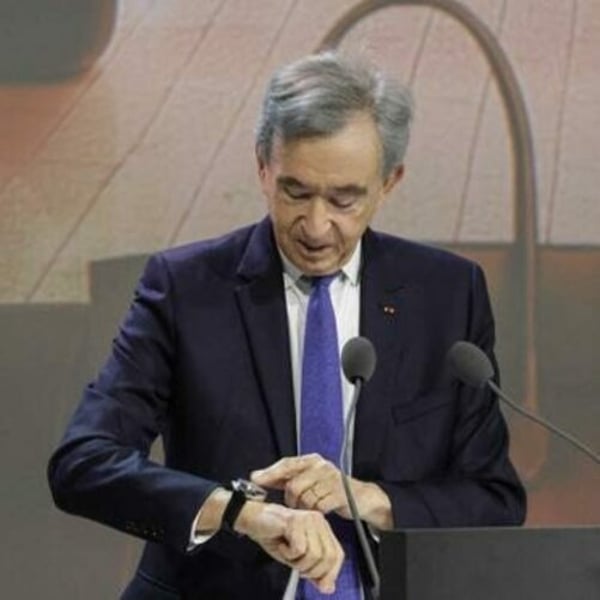
The FT noted that the group owned by Bernard Arnault, who reaffirmed his firm grip on the corporation at its recent AGM, has in recent months sold the 49% stake it held in Stella McCartney’s label, and divested itself of the label founded by the late Virgil Abloh. Nor is LVMH hiding its plan to sell off the whole DFS business, the retail group specialised in selling luxury products to international travellers, having disposed of DFS’s Chinese arm a few months ago.
At a time when the quest for rationalisation is a cardinal value, all of LVMH’s businesses are under the microscope. For example, the group’s media holdings (Les Echos, Le Parisien and Challenges, the latter the subject of an imbroglio), which are nevertheless strategic influence-wise. Any label within the group that isn’t profitable is under renewed pressure, after Arnault clearly stated the group’s plans are focused on two key fashion labels, Louis Vuitton and Dior, and on Tiffany & Co. in jewellery. A major portfolio overhaul is consistent with the recent changes and rejuvenation within the group’s top hierarchy, after LVMH named Stéphane Bianchi and Cécile Cabanis to the key positions of deputy group CEO and group CFO, respectively. In parallel, Arnault’s children have been assuming increasingly significant strategic roles within the organisation.
LVHM doesn’t however seem to be on the defensive. In fiscal 2025, its net available cash flow improved 8%, reaching €11.33 billion at the end of the period. A result that enables LVMH to consider making major external growth operations, given that Arnault has often hinted at names in the watch-making sector, frequently mentioning Patek Philippe and Richemont, and especially because LVMH was listed by Giorgio Armani in his will as one of the favoured buyers for his own fashion empire.
Copyright © 2026 FashionNetwork.com All rights reserved.
