



As a rule, I’m very positive about Ring cameras – especially during sales events (top tip: you just missed the Prime Big Deals day, but Black Friday is less than two months away).
The other day, though, I was shown some footage which changed my mind about the camera’s smart features which I’ve already tested out a few ways that might surprise readers. Where I live, however, in London, we don’t see much wildlife – just adventurous cats and urban foxes that have decided they prefer ransacking the scraps bins of chicken shops more than fending for themselves in the countryside!
As such, most of my tests of the Ring camera’s subject detection A.I. have revealed ‘a person’ or correctly spotted a pet.
There have been some funny ones, of course. I was also amused when the camera seemed to feel it had seen a little too much and decided ‘kissing’ was as much as it would say. Then again, that puts A.I. in very much the same mood as most British people – and Britishness will be important in this article – famously a nation with an understanding of awkwardness.
Identifying ‘a person’ is one thing, however. Wildlife is a bit more complicated. There are thousands of species and many have similar characteristics.
When you think about it, it is amazing that children can so readily identify the difference between (and group different types of) dogs, cats, hamsters, rabbits and more besides – as well as knowing to give rogue lions a wide berth.
Children are ‘trained’ on picture books, nature films, and toys. A.I. is trained too, and far more extensively, you could argue. So you’d expect it could identify animals too.
Well, apparently not.
Or at least not entirely.
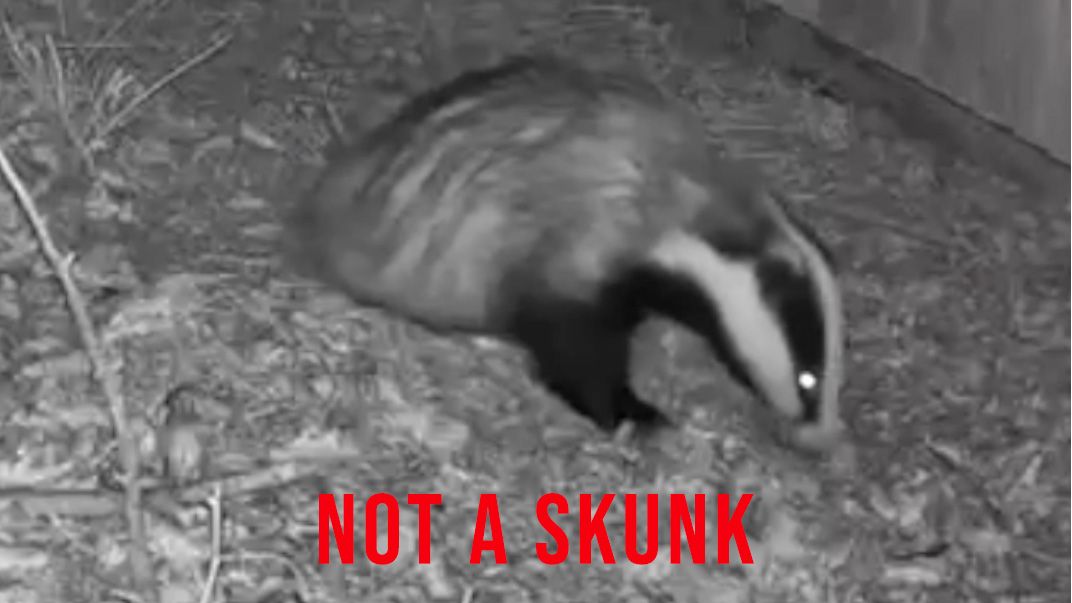
Instead, the A.I. is very good at suggesting that what it can see is one of a certain collection of animals. Animals common to American back yards are more likely to be suggested by the AI, as this video makes plain.
I imagine that’s fine in the USA, but where we Brits are very happy to see one of our cute but big, omnivorous European Badgers (Meles meles), Americans might be a little more worried by the specially agressive, smaller, browner variant from the other side of the Atlantic (Taxidea taxus).
The Ring, however, identifies the European Badger as a skunk – suggesting that perhaps the A.I. training favors the U.S. interpretation.
Now this is just a theory for now, but I’ve reached out to Ring for comment.