



Key Points
- Hafner said browser-based AI agents such as Meta’s Muse and Instinct are the most inaccurate way to search for travel, and that the more Muse scales, the more money it will lose.
- Lola connects directly to suppliers including GetYourGuide, Viator, and Hertz, and to distributors Duffel and Nuitée through APIs, rather than building on browsing websites.
- Booking Holdings has said it could put up to $100 million into Lola and another $100 million into Vayo, covering marketing and token costs; Lola has 14 employees.
Summary
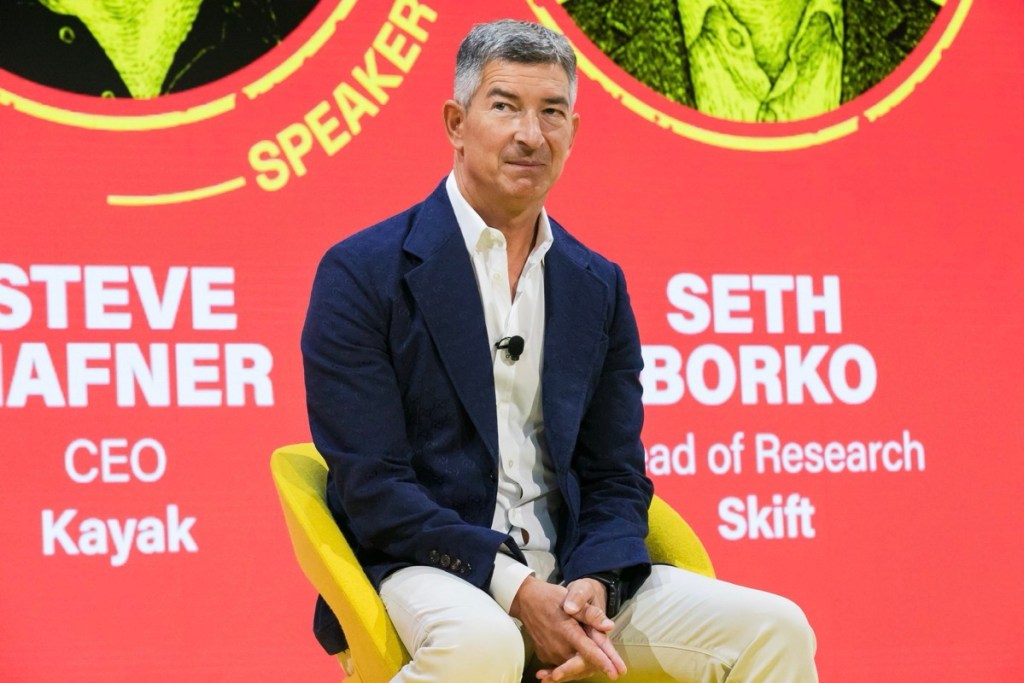
Steve Hafner, the Kayak co-founder now running Booking Holdings’ AI travel startup Lola, used the Phocuswright stage in Orlando to argue that browser-based AI agents such as Meta’s Muse and Instinct are the most inaccurate way to search for travel, and that he doesn’t see how Muse makes money given the cost of running the underlying AI models. Lola instead connects through APIs directly to suppliers including GetYourGuide, Viator, and Hertz, and to travel technology distributors Duffel and Nuitée. The startup covers travel, dining, events, and experiences with 14 employees, and Booking Holdings has said it could put as much as $100 million into Lola and another $100 million into its West Coast sister startup Vayo, with the money going to marketing and token costs. Hafner said AI agents and platforms aren’t drawing many transactions yet, and that Lola’s challenge is persuading travelers to book a restaurant through Lola rather than Resy. He said Lola and Vayo aren’t competing with each other, and that when the two start worrying about taking customers from each other, they’ll know they’ve succeeded.