



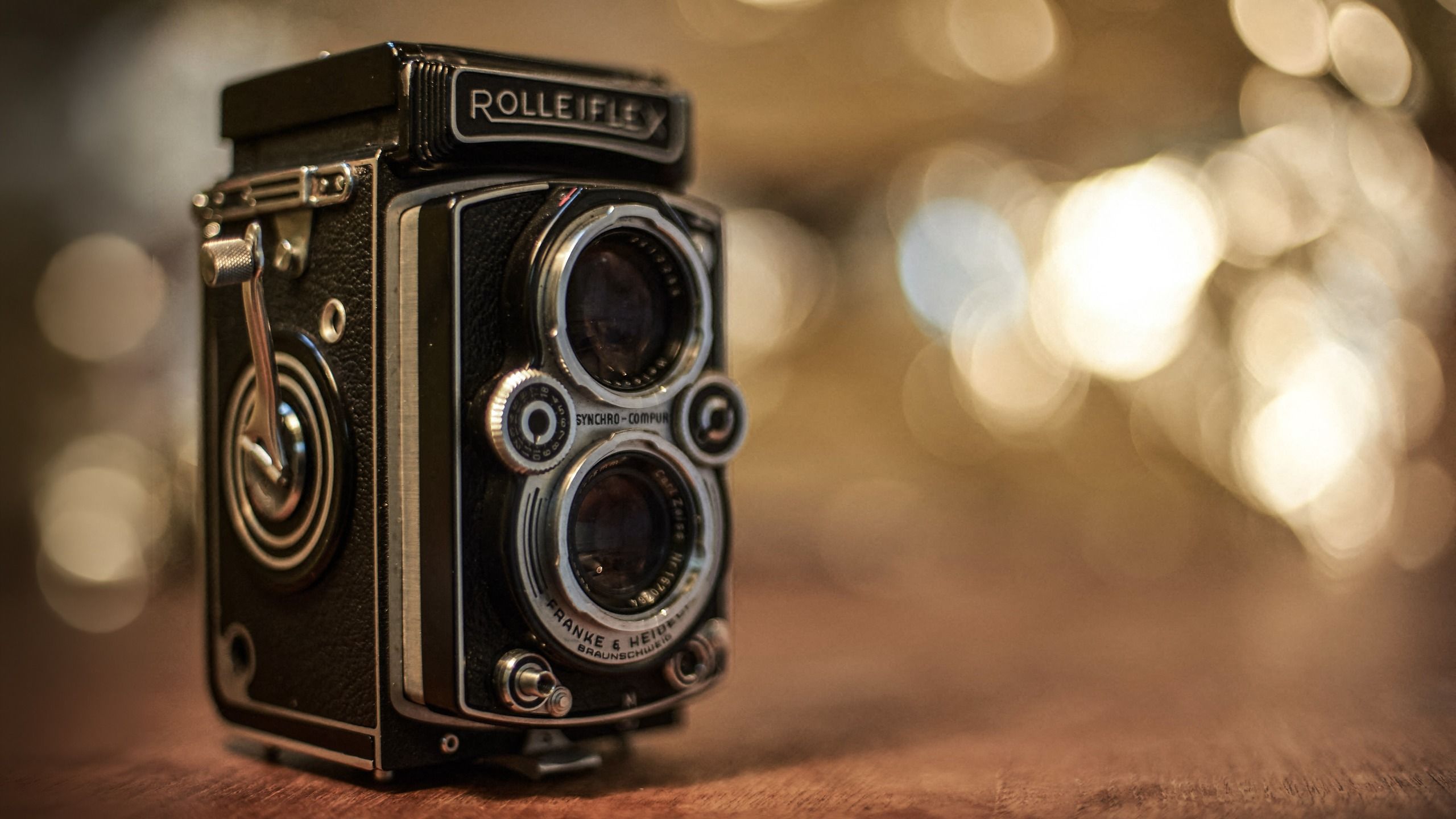
The German firm of Franke & Heidecke created the first commercially successful 6×6 twin-lens reflex (TLR) camera in 1929. And although it was very successful, it required that the photographer turn the wind knob, while watching for the next exposure number to a red window in the camera’s back.
This was much the same as any camera using paper-backed roll film at the time and, in fact, most 120 roll film cameras well into the 1950s. Doable, but not really convenient.
The 1932 Rolleiflex introduced the fold-out crank film advance to the Rolleiflex. It had automatic frame spacing / counting after the photographer initially positioned frame one using the red window as before.
Latest Videos FromDigital Camera World
But the Automat, introduced in 1937, went a couple of steps further, advancing the film and simultaneously cocking the shutter.
The Automat introduced an ingenious film-feeler roller. During loading, the film and backing paper passed between rollers. The mechanism detected the increased thickness where the actual film was attached to its backing paper and automatically engaged the frame-counting mechanism.
The photographer simply threaded the film, closed the back and turned the winding crank. The camera automatically stopped at frame one, no red window needed. Operating the crank advanced the film by exactly one frame, increased the frame counter by one and cocked the shutter.
That was a remarkably sophisticated system back in 1937 and it made the Rolleiflex exceptionally quick to operate. Wind the crank and the camera simultaneously advanced the film, positioned the next frame, advanced the counter and cocked the shutter.
The interlocking mechanism also greatly reduced accidental double exposures, though they could still be deliberately made if the photographer so desired.
It also made the lower-priced Rolleicord models possible, by using the older, less expensive to manufacture film knob wind; making the photographer also manually cock the shutter for each shot. This enabled Rollei to appeal to customers in different price brackets.
By the 1950s and 1960s, automatic frame advance had become normal on better-quality medium format cameras. But most photographers still had to align the ‘start’ arrows printed on the backing paper with marks inside the camera, close the back, and wind until the mechanism stopped at the first frame.
This was also true of the later Rolleicords, though they still advanced the film by turning the knob and cocked the shutter separately.
Since Kodak introduced 120 film in 1901, inexpensive cameras have used the red window method. The Beauty Six cameras of the 1950s, the Dianas of the 1960s and dozens and dozens of other low-cost cameras have had no mechanical frame counter – the photographer watched the backing-paper numbers through the red window.
Even today, the Holga and Diana+ cameras still use “the little red window”.
Another important innovation on the Automat was the pair of small control wheels between the two lenses. One controlled shutter speed and the other aperture, with the selected settings visible in small windows above the taking lens. This became one of the characteristic features of subsequent Rolleiflex cameras.
Like all Rolleiflex and Rolliecord models, this first Automat was a 6×6 cm twin-lens reflex using 120 film, producing 12 exposures per roll.

The taking lens was a Carl Zeiss Jena Tessar 75mm f/3.5 and a simpler, but somewhat brighter, 75mm f/2.8 viewing lens. The shutter was a Compur Rapid with speeds of 1-1/500 sec. Focusing was done with a large knob on the left side of the body.
In fact, the Automat was so innovative that it received the Grand Prix at the 1937 Paris International Exposition. The design was enormously influential and became standard on all later Rolleiflex cameras, which refined this arrangement rather than fundamentally changing it.
The Automat name itself leads to some confusion, as it became a series of progressively improved models beginning in 1937 and continuing into the 1950s. Later Automats acquired such things as improved finders, coated lenses, flash synchronization and a choice of Zeiss Tessar or Schneider Xenar taking lenses.
Eventually, the Automat name was retired and Rollei switched to naming their models after the maximum aperture of the taking lens.
It was the Automat that turned the TLR into a remarkably fast and very popular photographic instrument. By the end of production, in 2014, some 3.2 million Rollei TLRs had been made in both the regular 6×6 and the “Baby Rollei” 4×4 (127 film) formats.
You might also like…
Take a look at the best film cameras you can buy today.