

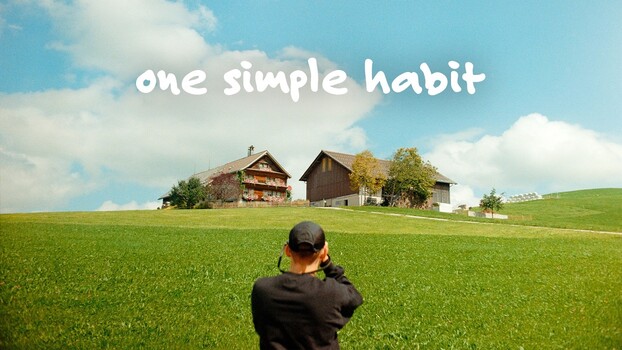
Most of the strongest documentary and street photographs come from moments the photographer almost missed. The difference between catching them and losing them often comes down to whether you were paying attention at all.
That tension sits at the center of a relaxed talk from Teo Crawford, who walks through a single habit he believes shapes his photography more than any gear or technique. Crawford separates the topic from commercial or highly technical work and focuses instead on artistic and documentary shooting, the kind that captures life and light and fleeting scenes. He makes a distinction that gets skipped a lot: reflecting on your results is useful, but reflecting on the process that produces those results is harder and arguably more valuable. The process feels messy and random, he admits, which is why a single guiding habit becomes so useful. That habit is to actively decide to notice.
Crawford is honest about how rarely he actually does this. He describes the automatic reach for his phone the moment he steps outside, the earbuds going in, the screen lighting up during a three-minute wait for the tram. Those small stretches of downtime are exactly when interesting things happen around you, and they slip past unnoticed when your attention is somewhere else. He frames the phone habit as natural rather than shameful, since the brain genuinely enjoys that low-effort stimulation. The point he lands on is that the cost of that stimulation is your presence, and presence is what lets you anticipate a scene before it forms.
The example he shares makes the idea concrete. Waiting at a bus stop in Austria in 2023, not on his phone because a friend was with him, Crawford noticed the last sliver of low-angle sunlight falling across the street. When a cyclist approached, he could already predict the rider would pass straight through that light, and he was ready. He’s quick to redirect attention away from the mountain backdrop and toward the part that actually matters for the rest of us: the light and the timing. You may not have a scenic view at your local stop, but you almost certainly get good light sometimes, and the same anticipation applies wherever you are.
This connects to a wider shift worth thinking about. Street and documentary photography has always rewarded patience and attention, but the competition for your attention is stronger now than it has ever been. The same phone that holds your camera also holds an endless feed engineered to keep your eyes down. Photographers like Joel Meyerowitz and Alex Webb built entire bodies of work on the ability to read a scene early and position for a moment that hasn’t happened yet, a skill that depends completely on being present in real space. Treating attention as a trainable practice, something you protect on purpose, puts you back in a long tradition rather than making you an outlier. The good news is that the skill scales down to ordinary life. A bus stop, a grocery run, a walk to nowhere in particular all become practice grounds once you stop filling every empty minute with a screen.
Crawford’s fix is refreshingly small. Rather than relying on willpower alone, he moves his phone from his pocket into his bag, where reaching for it takes just enough extra effort to interrupt the automatic gliding motion. He trusts that breaking the physical mechanism does more than good intentions, which lines up with how habits actually work. It’s a change anyone can copy today without spending a cent or buying anything, and that accessibility is part of what makes the video land.
Give the video above a watch to see the cyclist shot in full and hear how Crawford talks through the moment he almost didn’t have.
