



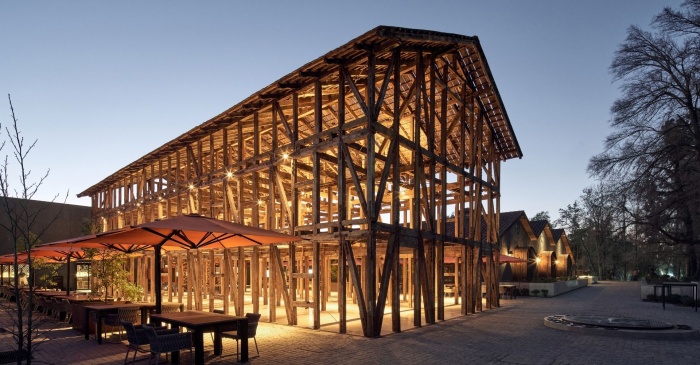
Set among the vineyards of Chile’s celebrated Maipo Valley, Centro del Vino Concha y Toro has been named South America’s Leading Tourism Winery 2026 at the World Travel Awards, recognising an experience where fine wine, history and the beauty of the Chilean countryside come together.
There are places where wine is simply poured into a glass, and others where every sip tells a story of landscape, heritage and ambition. At Centro del Vino Concha y Toro, in the heart of Chile’s historic wine country, the experience begins long before the first tasting. Here, rows of carefully tended vines stretch towards the Andes, the air carries the character of the surrounding countryside, and the story of one of South America’s most influential wine producers unfolds through architecture, cellars and the art of winemaking.
For travellers seeking a deeper connection with Chile, this is a destination that brings together two increasingly compelling reasons to visit: the country’s extraordinary natural scenery and its growing international reputation as a world-class wine destination.
That combination has now earned international recognition. Centro del Vino Concha y Toro has been named South America’s Leading Tourism Winery 2026 at the World Travel Awards Caribbean & The Americas Gala Ceremony, held at Princess Grand Jamaica on 11 October.
The accolade highlights the growing importance of wine tourism across South America, where vineyards are no longer simply places of production but destinations in their own right, inviting visitors to discover the stories, people and landscapes behind the wines they love.
A vineyard shaped by the Andes
Chile’s geography has played a defining role in its wine-making success. A long, narrow country bordered by the Pacific Ocean to the west and the Andes to the east, it benefits from a remarkable diversity of climates and soils. Cool coastal influences, warm inland valleys and the protection of the mountains create conditions suited to an impressive range of grape varieties.
Among the country’s most celebrated wine-producing areas is the Maipo Valley, close to Santiago. Particularly renowned for its Cabernet Sauvignon, the region has become synonymous with structured reds, elegant fruit character and wines capable of developing complexity over time.
It is here that the Concha y Toro story takes centre stage.
Founded in 1883 by Melchor de Concha y Toro, the winery grew from an ambitious venture into one of Chile’s most internationally recognised wine businesses. Its history reflects the evolution of the country’s wine industry, from its nineteenth-century foundations to its position today among the leading names in global wine production.
The surrounding vineyards provide a compelling introduction to Chilean terroir, where sunshine, mountain air, soils and careful vineyard management combine to shape the character of each vintage.
For visitors, the opportunity to explore this landscape offers a welcome counterpoint to the pace of Santiago. Within reach of the capital, the vineyard setting invites a slower rhythm, one in which the pleasures of the table are inseparable from an appreciation of place.
More than a wine tasting
The modern wine tourism experience is about considerably more than sampling a selection of vintages. Visitors increasingly want to understand how a wine comes into being, why a particular grape thrives in one valley rather than another, and how generations of winemakers have shaped a producer’s identity.
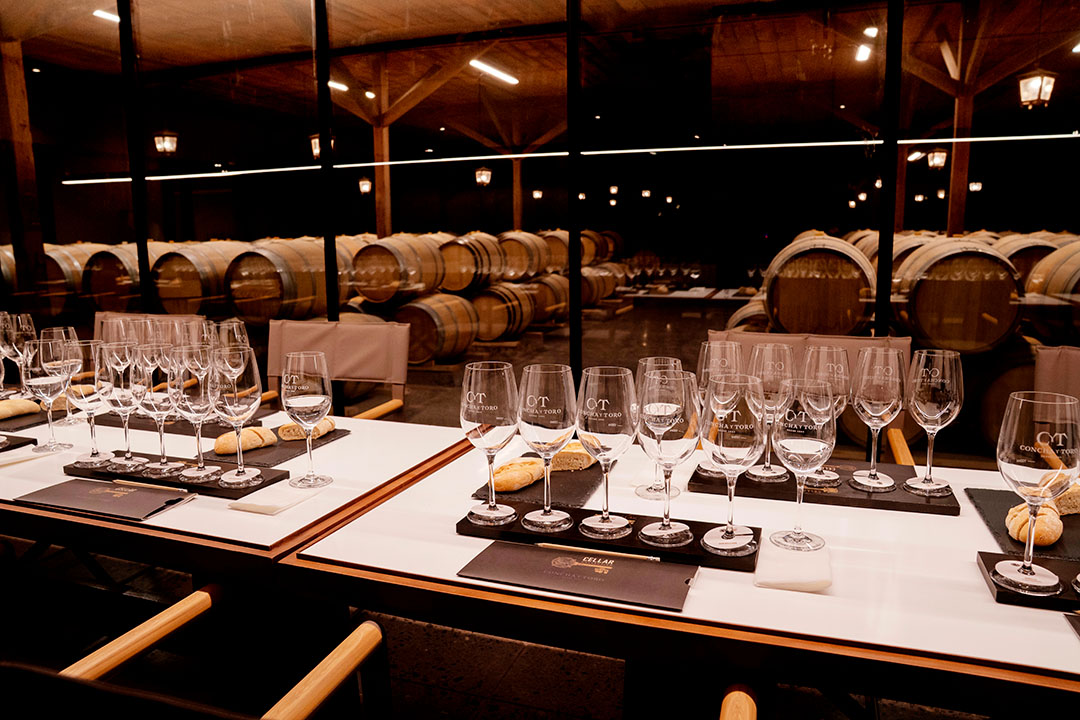
Centro del Vino Concha y Toro brings these elements together through a visitor experience that places the winery’s heritage and wines at the heart of the journey.
Exploring the historic estate offers an introduction to the traditions that underpin Chilean winemaking, while the cellars and vineyard surroundings provide context for understanding the relationship between climate, grape varieties and style.
For wine enthusiasts, the attraction lies in discovering the distinctions between the winery’s celebrated labels and understanding how its portfolio reflects both regional character and contemporary winemaking.
Concha y Toro is particularly associated with Cabernet Sauvignon from the Maipo Valley, while its wider portfolio encompasses wines from several Chilean regions and a range of styles. This breadth provides visitors with a broader perspective on the country’s wine landscape, demonstrating how Chile’s diverse geography can produce wines with distinctly different personalities.
A guided tasting, meanwhile, becomes an exercise in discovery: the interplay of aroma, texture, acidity and structure, and the ways in which these qualities reveal something about the vineyard from which the wine originates.
The legend behind the label
Few wine producers have cultivated a story as enduring as Concha y Toro’s association with Casillero del Diablo, or the Devil’s Cellar.
The legend centres on Melchor de Concha y Toro and the tale that he spread rumours of the devil inhabiting his cellar to deter people from stealing his prized wines. Whether encountered as folklore or marketing history, the story has become one of the most recognisable elements of the winery’s identity.
For visitors, it adds another dimension to the experience, demonstrating how storytelling can become intertwined with a wine’s reputation. Beyond the label itself lies a broader narrative about protecting quality, building a brand and transforming a local wine-making tradition into an international name.
This blend of heritage and imagination is part of what makes wine tourism so engaging. A visit becomes not simply an opportunity to taste a famous wine, but a chance to explore the stories that have helped it achieve recognition around the world.
Chile’s place on the global wine map
Chile has established itself as one of the great wine-producing countries of the Southern Hemisphere, earning international recognition for the quality and value of its wines. Cabernet Sauvignon remains an important calling card, while Carmenère, once widely associated with Bordeaux before finding a new home in Chile, has become another defining expression of the country’s wine identity.
Yet Chile’s appeal extends well beyond individual grape varieties. Its wine regions offer travellers an opportunity to combine gastronomy, scenery, culture and hospitality in a single itinerary.
The Maipo Valley is particularly accessible for visitors staying in Santiago, making it an attractive addition to a city break. A day among the vineyards can complement the capital’s restaurants, museums and lively neighbourhoods, while those travelling further into Chile can explore other wine-producing regions, each with its own climate, traditions and distinctive character.
For international travellers, the attraction is the opportunity to experience wine at its source: to see the vines, understand the landscape and appreciate the people and decisions behind every bottle.
Recognition for a distinctive visitor experience
The World Travel Awards have become an established feature of the international travel calendar, recognising achievement across tourism, hospitality, destinations and visitor attractions.
Being named South America’s Leading Tourism Winery 2026 gives Centro del Vino Concha y Toro an opportunity to strengthen its profile among travellers increasingly interested in experiences that connect food and drink with a destination’s culture and heritage.
The award also reflects the evolution of wine tourism itself. Across the world, leading wine estates are developing experiences that appeal not only to dedicated collectors and enthusiasts, but also to curious travellers seeking a memorable day out, an introduction to regional cuisine or a different perspective on a country they are exploring.
For Chile, where wine is closely woven into national identity, such experiences provide another way to showcase the country’s cultural and natural attractions to an international audience.
A toast to Chile
A visit to Centro del Vino Concha y Toro offers a reminder that the finest wine experiences are rooted in a sense of place. The surrounding landscape, the history of the estate and the distinctive character of Chilean wines combine to create something more enduring than a tasting alone.
For travellers planning an escape to Santiago, the Maipo Valley offers a compelling reason to venture beyond the city. Here, the Andes provide the backdrop, the vineyards set the pace, and the glass becomes a way of understanding the land.
With its new World Travel Awards title, Centro del Vino Concha y Toro takes its place among South America’s recognised wine tourism destinations, celebrating a legacy that began in the nineteenth century and continues to draw the attention of wine lovers around the world.
In Chile, a great wine is never just a drink. It is a reflection of the soil, the climate, the people and the passage of time. At Concha y Toro, that story is an invitation to visit, explore and raise a glass to one of the great pleasures of travel.


