



Breaking Travel News Editor-in-Chief Justin Cooke sat down for an exclusive conversation with Dr Abdulla Niyaz, the Maldives’ Minister of State for Tourism and Civil Aviation, to discuss the destination’s response to the Middle East crisis and the ambitions shaping its next chapter.
For a destination sold on the promise of escape, the Maldives is acutely exposed to events beyond its shores. Disruption to the Gulf’s aviation networks has brought that dependence into focus, prompting a revised target of 2.5 million visitors and renewed efforts to broaden the routes that bring travellers to its islands.
Yet the immediate pressure on connectivity sits alongside a much longer investment horizon. Airport expansion and a pipeline of potentially 50 additional resorts over the next decade point to continued confidence in the destination. When we met at Arabian Travel Market, Niyaz’s challenge was to explain how those ambitions fit together: restoring access today while planning for the demands that growth will place on the islands tomorrow.
After 54 years of tourism, the Maldives has a model that others have sought to emulate. Its next Tourism Master Plan will test how far that model can evolve while preserving the reefs, lagoons and sense of seclusion that make travellers want to come in the first place.
Capacity and connectivity drive the next phase
Airport capacity sits at the centre of the Maldives’ growth plans. For years, demand has outpaced the country’s ability to accommodate visitors during peak periods, particularly when regional aviation disruptions have affected connecting markets.
Niyaz said the Maldives had worked closely with airlines and government partners to maintain services during the recent Middle East disruption and rebuild capacity as confidence returned. At peak season, some key connecting markets would traditionally provide around 20 flights, with capacity recovering to approximately 15 as the market stabilised.
The experience reinforced the importance of aviation resilience. The national carrier, Maldivian, has begun operating wide-body aircraft and opening new markets, including Australia. A further wide-body aircraft is being considered, potentially allowing the airline to reach additional destinations in China and South Asia.
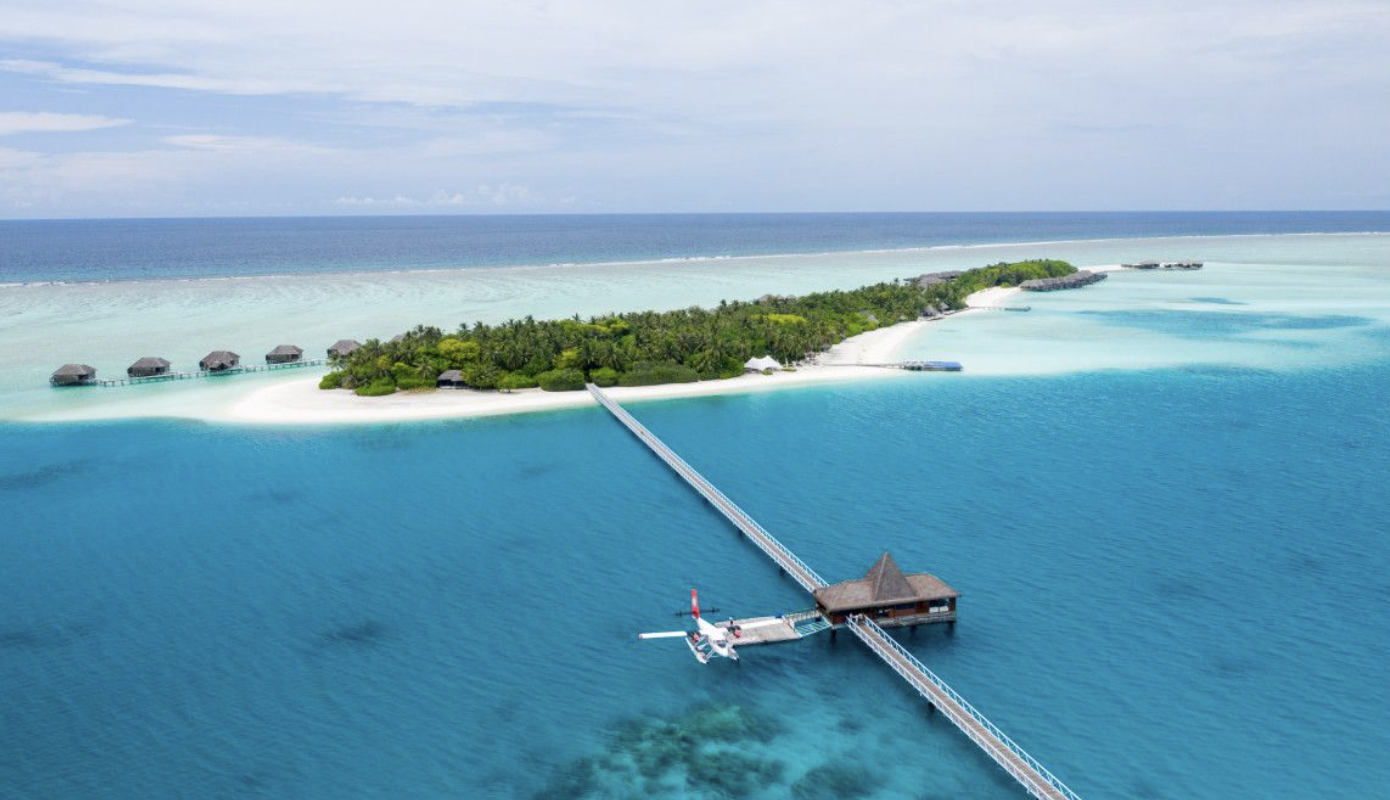
For Niyaz, the strategy is about more than adding seats. It is about ensuring that the Maldives is not overly dependent on a limited number of airlines, hubs or source markets.
China has returned as the Maldives’ largest source market, with tourism officials travelling to three Chinese cities to meet travel trade and aviation partners. Similar activity has taken place in Russia, while discussions continue around additional markets including Vietnam.
The integration of civil aviation within the Ministry of Tourism’s wider mandate has also brought airlines, airports, government agencies and tourism stakeholders closer together. That coordination will be essential if the Maldives is to move towards its longer-term visitor ambitions.
Following the crisis in the Middle East, the Maldives has revised its visitor target to 2.5 million. Disruption to aviation has sharpened the focus on rebuilding connectivity and diversifying source markets, even as airport expansion and new accommodation prepare the destination for further growth.
A new generation of luxury resorts
Niyaz expects roughly 50 additional resorts could open during the coming decade. Around 100 projects are at different stages of development, although only a proportion are expected to open in any individual year because of the time required to plan, finance and build island resorts.
Three resorts are still expected to open this year, with further projects anticipated during the first and second quarters of next year.
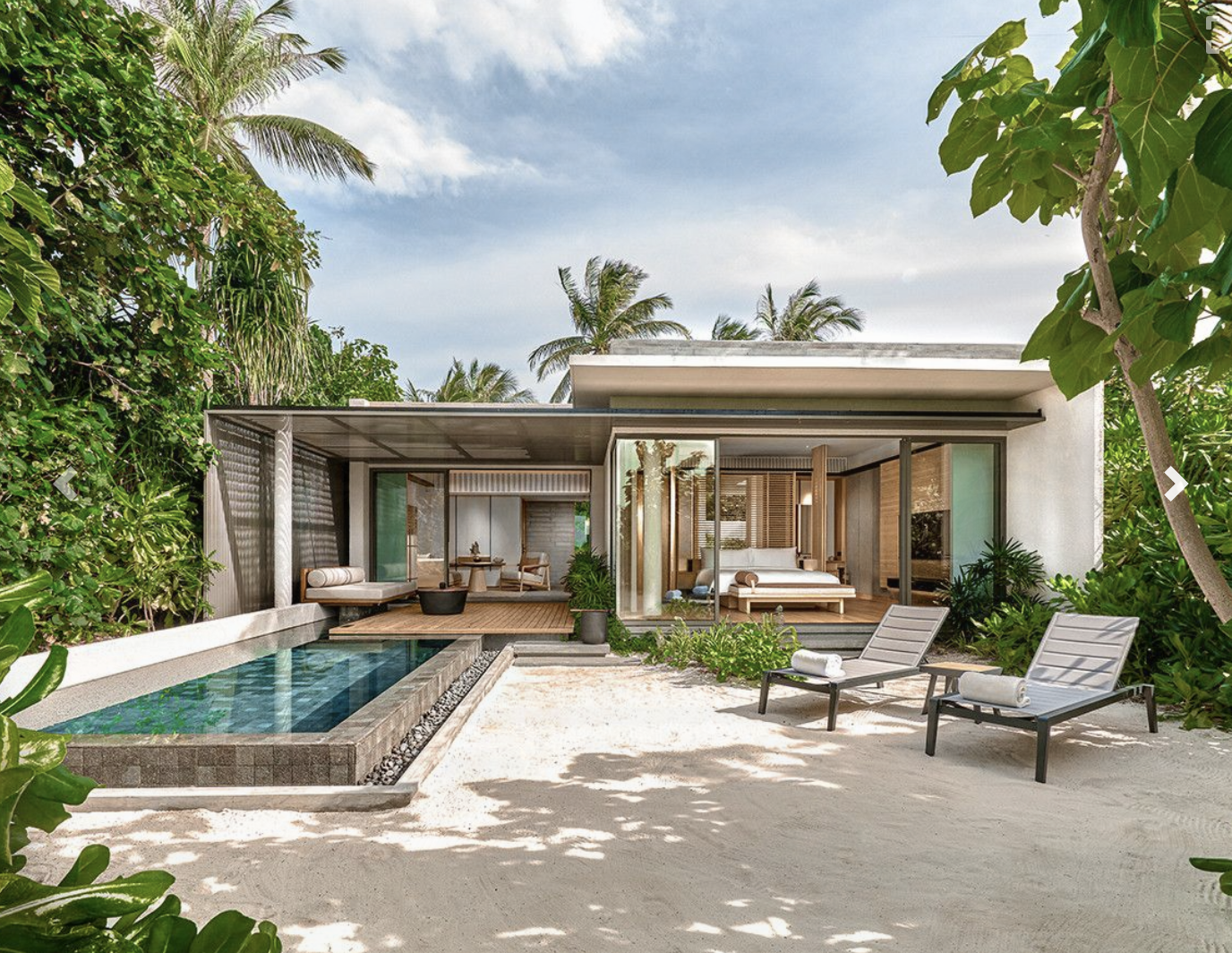
The pipeline also confirms that the Maldives is not abandoning its premium positioning in pursuit of volume. New developments range from entry-level luxury to ultra-luxury, with brands including Nammos, Atlantis, Maxx Royal, Baccarat, Bulgari, Mandarin Oriental and Rosewood among those investing in or expanding their presence in the destination.
Several existing operators are also developing second Maldivian properties, underlining the confidence of international hotel groups in the market.
Yet the development model is beginning to evolve. The Maldives has opened its first tourism Special Economic Zone, Project Isla, in Noonu Atoll. Conceived as a sustainable tourism township, the project offers a different investment structure from the traditional one-island, one-resort model.
Strata ownership structures are also emerging, while further investment models and residential components could be considered as the government develops its next Tourism Master Plan.
That shift could help the Maldives diversify its tourism economy, but it also raises questions about density, infrastructure and the long-term management of mixed-use developments across a geographically dispersed island nation.
The sixth Tourism Master Plan
The current fifth Tourism Master Plan concludes next year, when work will begin on the sixth. The new strategy is expected to sit within the government’s proposed 20-year National Development Plan, linking tourism more closely with national infrastructure, energy, aviation, communities and wider economic development.
For Niyaz, that alignment is critical. Tourism cannot be planned in isolation from the country’s limited land area, transport requirements, energy needs and environmental pressures. The next master plan is therefore expected to include measurable outcomes and key performance indicators rather than broad aspirations alone.
Officials are studying tourism destinations around the world to assess what has worked, what has failed and how changing concepts of luxury could be adapted to the Maldives.
The process comes at a significant moment. After more than five decades of tourism development, the country is no longer simply deciding how to attract visitors. It is deciding how much growth its islands can support and what form that growth should take.
The master plan will need to address more than resort numbers. It will also have to consider airport and seaplane capacity, waste management, freshwater supply, energy generation, workforce accommodation, local community participation and the resilience of infrastructure exposed to climate change.
Growth while protecting the product
The Maldives’ tourism proposition depends on the same natural environment that development must protect: coral reefs, beaches, lagoons and low-lying islands shaped by climate change, erosion and rising sea levels.
Niyaz said environmental safeguards had been embedded in the Maldivian tourism model for decades. Resort development remains subject to environmental impact assessments and planning requirements. Buildings are restricted in height, generally remaining below the tree line, while development density and island carrying capacity are controlled.
The rules have evolved as resort concepts have become more sophisticated, but the principle remains that development should fit the island rather than overwhelm it. That discipline has helped create the horizontal, low-rise resort architecture that has become synonymous with the Maldives and influenced tropical resort development elsewhere.
The next challenge is to apply the same approach to energy. The government is targeting 33 per cent renewable energy within electricity generation, with solar expected to play a major role.
New resorts are increasingly incorporating renewable energy from the design stage, while existing properties are using rooftops, staff islands and other available surfaces for solar generation. Floating solar is also being explored as part of wider government plans, potentially contributing to electricity supply in the central region.
Financing facilities are available to help resorts invest in renewable infrastructure, while external companies and investors are increasingly participating in the transition.
Certification is also becoming more widespread. Niyaz pointed to resorts adopting programmes including EarthCheck and Green Globe, in some cases across entire hotel groups rather than individual properties. The government is developing a national eco-tourism accreditation framework intended to create a more consistent system across the industry.
For a destination whose global reputation is inseparable from its environment, sustainability cannot simply be a branding exercise. The Maldives must demonstrate that it can increase aviation capacity, add resorts and welcome more visitors while reducing the environmental intensity of each stage of growth.
That will require transparent measurement. Renewable energy targets will need to be matched by data on emissions, water use, waste, reef health, coastal change and the cumulative impact of construction and visitor activity.
The GCC opportunity
The Middle East will be central to that strategy. The region currently represents around 5.2 per cent of the Maldives’ market, with Dubai and Doha among the most important aviation hubs connecting the islands to the rest of the world.
Saudi Arabia is currently the largest individual GCC source market, delivering around 29,000 visitors so far this year, approximately 1.1 per cent of total arrivals. Niyaz sees considerable scope to increase those numbers.
The Maldives is strengthening partnerships with airlines and tourism organisations across the Gulf, including Emirates, while considering more coordinated destination marketing across the region.
The relationship extends beyond visitor arrivals. Gulf countries and institutions have played an important role in Maldivian investment and financing, including during periods of economic and geopolitical disruption. For the Maldives, deeper engagement with the GCC is therefore part tourism strategy, part aviation strategy and part investment strategy.
The opportunity is also strategically important because Gulf markets can support the Maldives’ premium positioning. Visitors from the region are a natural fit for the destination’s luxury resorts, private transfers, wellness products and high-value experiences, helping the country pursue greater economic value rather than relying solely on higher arrival volumes.
A destination at an inflection point
The numbers are getting bigger: more airport capacity, more routes, potentially 50 additional resorts over the next decade and a revised target of 2.5 million visitors annually. Yet the most important question is not the scale alone.
Few destinations have had 54 years to refine a tourism model built around a distinctive natural environment. The Maldives has repeatedly adjusted that model without abandoning its core proposition, controlling density, protecting low-rise development, moving further upmarket and revising its Tourism Master Plan as markets, technology and traveller expectations change.
Its sixth master plan arrives at another inflection point. With a 20-year national strategy sitting above it, renewable energy targets reshaping infrastructure, aviation policy increasingly integrated with tourism, new investment structures emerging and another generation of global luxury brands committing capital, the Maldives has an opportunity to determine not merely how much tourism it wants, but what kind of tourism it wants.
The decision will affect more than resort investors and international hotel groups. It will shape the future of local employment, island communities, public infrastructure, energy security and the natural systems on which the tourism economy depends.
For a destination preparing for its next phase of growth, that distinction may prove more important than the headline arrival number.