



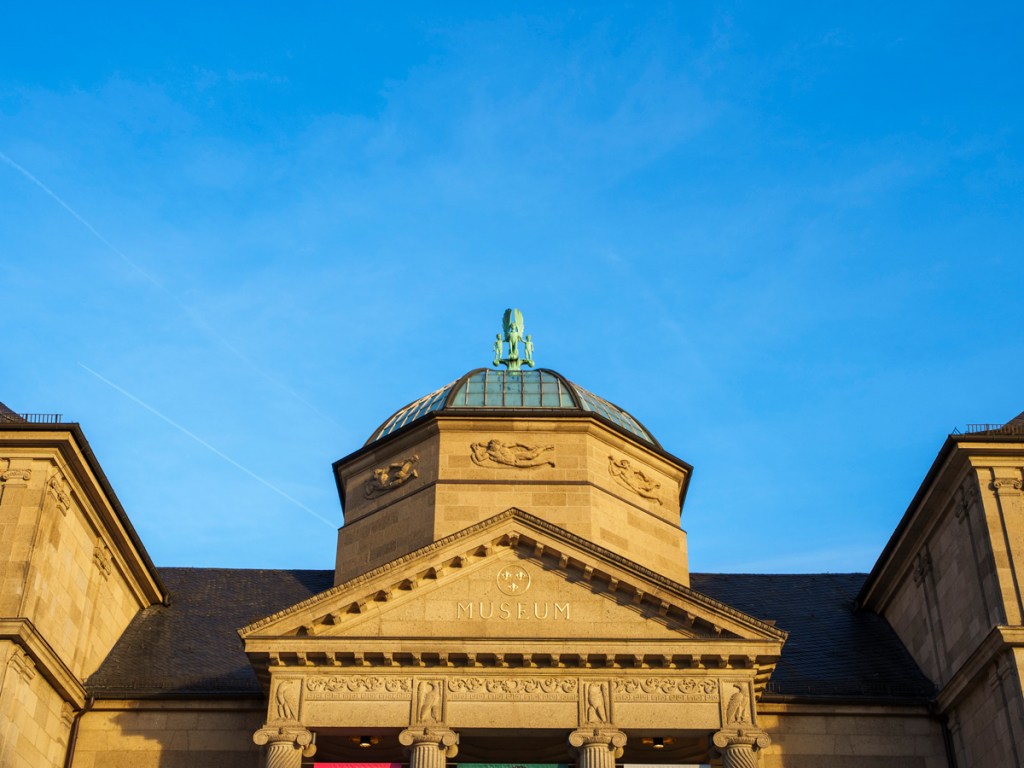
The Museum Wiesbaden will return 10 human skulls to Indonesia in a formal ceremony on November 10.
The Hessen Wissenschaft, the state culture ministry, said it will be the first German museum to return human remains from the Dutch colonial era to the country, reports Monopol. Out of respect for the deceased individuals, the remains will be covered with a cloth during the ceremony.
Located in the state of Hesse and about an hour west of Frankfurt, the Museum Wiesbaden’s founding collection dates to the late 18th century and early 19th century, when it was assembled by father-son collectors Johann Christian Gerning and Johann Isaac Freiherr von Gerning. It ranged from paintings and drawings to books and maps to insects and coins. At the suggestion by Johann Wolfgang von Goethe, the younger Gerning donated his holdings to the Duchy of Nassau; they were subsequently split up into three museums and then transferred to the city of Wiesbaden in 1900. Since 1973, the three institutions have been managed by the state of Hesse as the Museum Wiesbaden.
The skulls entered Germany in the 19th century and initially were taken from Indonesia by Ernst Albert Fritze, a military physician who worked for the Dutch East India Company beginning in 1817, according to research by Andy Reymann, the museum’s curator of cultural anthropology. Fritze donated several natural history objects to Nassau Society for Natural History, the Museum Wiesbaden’s predecessor, beginning 1833.
Reymann has been researching the origins of Fritze’s human skull collection for several years, and in 2023, the Museum Wiesbaden received funding from the German Lost Art Foundation, along with Institute of Forensic Medicine at the University Hospital in Frankfurt am Main and researchers from the Department of Dutch Studies at the University of Cologne, to continue that research.
“Although Fritze was well-known in his time and is frequently mentioned in the writings of his student Junghuhn, very little has been compiled about him personally. The provenance of the human remains also remains unclear,” reads a description of their research project.
In a statement, the Hessian Ministry of Culture said the restitution “is part of the efforts of the Hessian state institutions to systematically examine their collections for unlawful acquisitions during the colonial period and to assume responsibility for the history of their holdings.”