



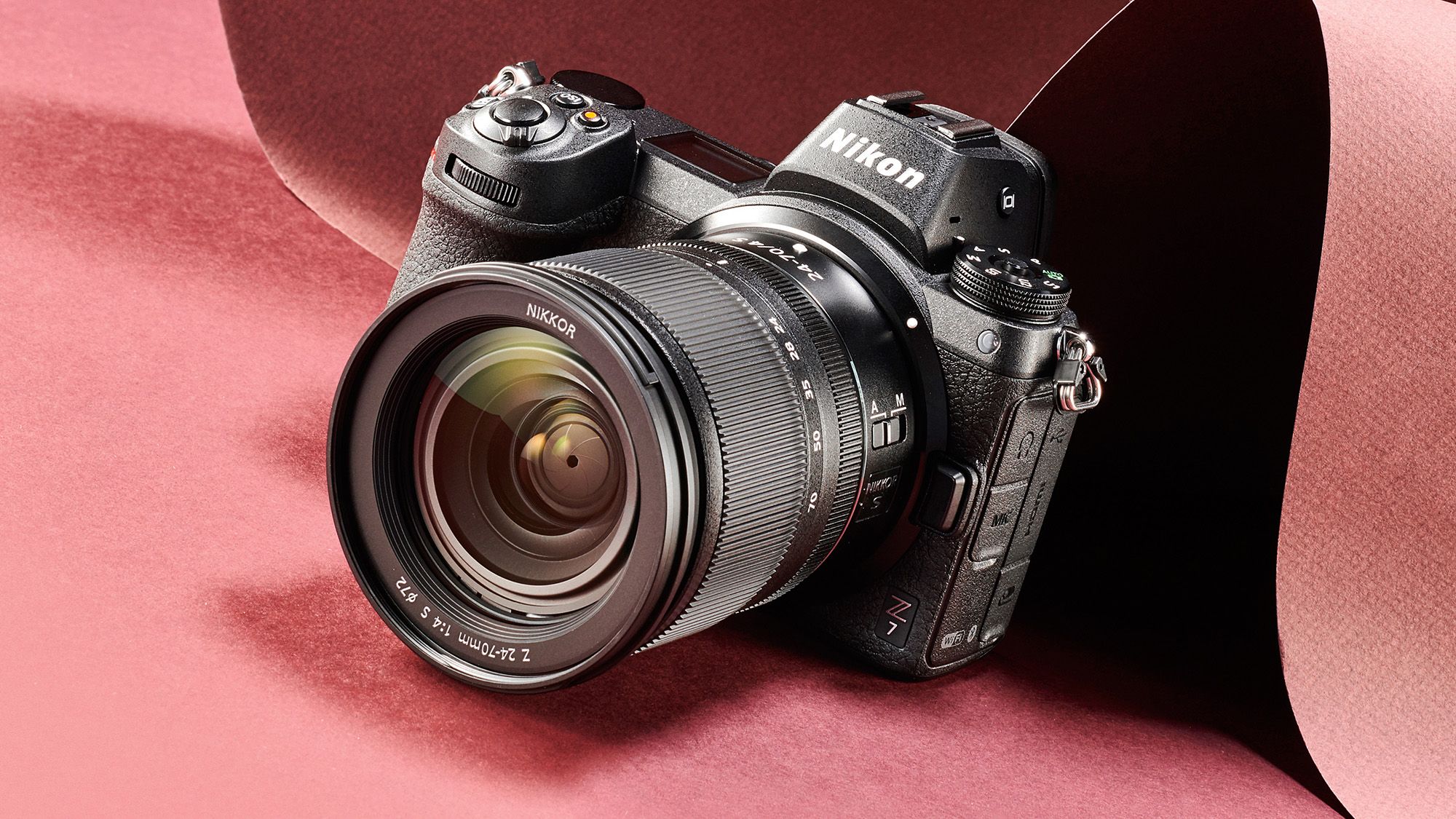
The Nikon Z7 is trending, which is a curious instance given that the first-generation Z-Series camera was released way back in 2018 and has long since been discontinued.
In fact, the Nikon Z7 launched alongside the Nikon Z6 as Nikon’s very first full-frame mirrorless camera. As such, it was billed as a high-end body – but it was quickly superseded by the Nikon Z7 II in 2020, which fixed a couple of notable problems.
Firstly, the Nikon Z7’s AF system wasn’t its strong point. Nikon did make it a lot better thanks to some clever firmware updates, but the Z7 II’s dual Expeed 6 image processors afforded it a proper upgrade.
Latest Videos FromDigital Camera World
Secondly, the Nikon Z7 only had a single memory card slot (XQD / CFexpress), much to the chagrin of wedding and events photographers who wanted a second slot for in-camera backup.
And finally, the Nikon Z7 didn’t launch with a battery grip, and never had a vertical grip, another bone of contention for working professionals. So, why on Earth would you bother with the Nikon Z7 in 2026?
Image quality and price
Where the Nikon Z7 really excelled, it still excels today, and that’s image quality. The camera’s 45.7MP full-frame BSI CMOS sensor is a thing of sheer beauty.
If you’re looking for a high-resolution camera that you can crop into, or simply the very best image quality you can get your hands on, the Nikon Z7 will serve you well. Especially for the price.
Here’s the reason I’m sure most people are looking for the Nikon Z7 in 2026: it’s a darn good deal on the used market.
Right now, prices at MPB start at $854 / £699. Let’s put that into perspective. That’s in the ballpark of entry-level cameras like the Canon EOS R50, Fujifilm X-T30 III and OM System PEN.

If you’re a landscape, astro, still life or architectural photographer who doesn’t require whip-fast autofocus and lightning burst speeds, there’s an argument that cameras such as the Nikon Z8 or Canon EOS R5 Mark II are overkill.
The Nikon Z7 will give you the megapixel grunt you need, the pliability in post-production, and the opportunity to crop tight, while affording you plenty of leftover capital to spend on lenses.
On that subject, any Nikon Z-Series camera is a good buy when it comes to affordability due to the presence of the Nikon FTZ Adapter. This enables you to adapt hundreds of cheap DSLR lenses onto your Nikon mirrorless camera, with AF working seamlessly on later models such as AF-S lenses.
Plus, the Nikon Z7’s in-body image stabilization will also give lenses without optical image stabilization a bit of a boost.
You might also like…
Take a look at Nikon’s latest camera: Nikon Z5IIC review: an awkward viewfinderless camera design that’s heavy in the hand, heavy on specs, and light on your wallet. Maybe you’re interested in what could be on the horizon: Reported Nikon Z70 leak suggests rumored mirrorless camera could have 2x digital teleconverter. Plus, here’s the latest camera news.


