



A new commercial portfolio usually starts with borrowed ideas: a lighting setup from a tutorial, a look lifted from someone you admire, a composite you watched get built layer by layer. Every test shoot costs you time, money, and favors from stylists and models, and the images that come out of it decide whether an agency or brand ever calls.
Max Bridge argues that when you’re building a portfolio meant to earn a living, online educators, creators, and even established photographers’ websites are the wrong place to take your cues. An educator is teaching a technique, and the image that demonstrates it was never offered as a picture of what brands are commissioning this year. Established portfolios have a different problem. Someone who has worked for decades may still show older pieces next to current ones, and if you happen to pick the older ones to emulate, your spec shoot produces work nobody is hiring for. Bridge is clear that tutorials and other photographers still have value for learning and inspiration, and his point is specifically about the commercial book you show clients.
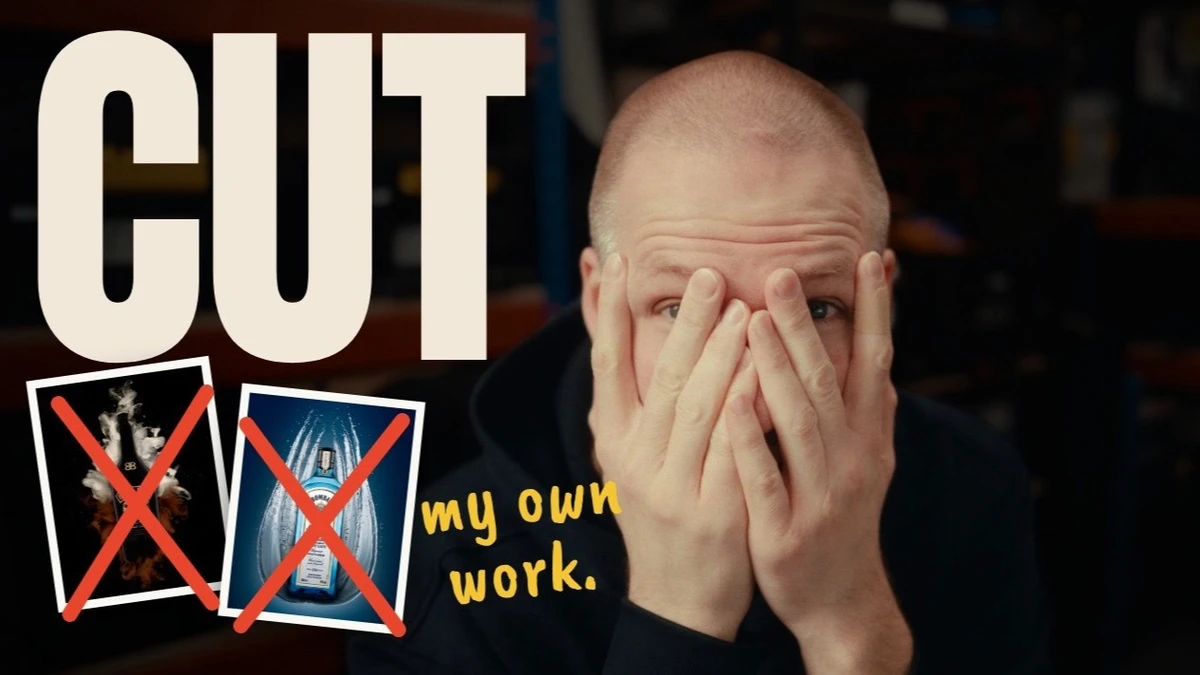
To show what dated looks like, Bridge opens his own portfolio catalog and goes through images he and his agent cut during a recent pass over his website. Many of them are technically solid. A few he still likes a lot. They went anyway, and the reasons vary. A heavily composited beauty shot now reads as fake next to current advertising. A monochrome shoe image would sit awkwardly among the liquid and drinks work he’s known for, and he points out that a single off-category frame makes agencies and brands wonder what you actually shoot. Other images are simply polished in a way that belongs to an earlier era, which he connects to an earlier argument of his that a lot of AI-generated imagery looks 10 or 20 years old.
Bridge also raises a variable that’s easy to lose track of when your references all come from a global feed: the market you sell into. He’s based in the UK and shoots internationally, and he notes that clients in China and parts of the Arab world often prefer a more perfected finish, with flawless highlights and smooth gradients, closer to what UK clients wanted about 10 years ago. An image that feels dated to a London agency can still be commercially viable somewhere else. The same frame might earn a place in one photographer’s book and not another’s, depending entirely on who they’re pitching.
So where should you look? Bridge’s answer is the world around you: the billboards, bus and Tube ads, and TV spots running right now in your market. Current advertising is the most direct signal of what images and videos brands are commissioning, so use educators and other photographers for learning and inspiration, and use the ads to decide what goes in the book.
None of this asks you to give up your own style. Bridge says your commercial work should carry your voice, as long as it sits within the range of what clients are buying right now. Personal projects can be as experimental as you like, and he suggests giving them a separate section of your website so they don’t muddy the message of the main portfolio. He’s candid that he made the same mistake early on, producing images modeled on photographers and educators he admired that looked good and held up technically but didn’t match what anyone was commissioning at the time.
He closes by recommending two UK creators: Scott Choucino of Tin House Studio for the business side of photography, and director and cinematographer Scott Peters for honest project breakdowns and talk about rates.
The video steps through each image Bridge cut from his own catalog, with his reason for dropping it.


